
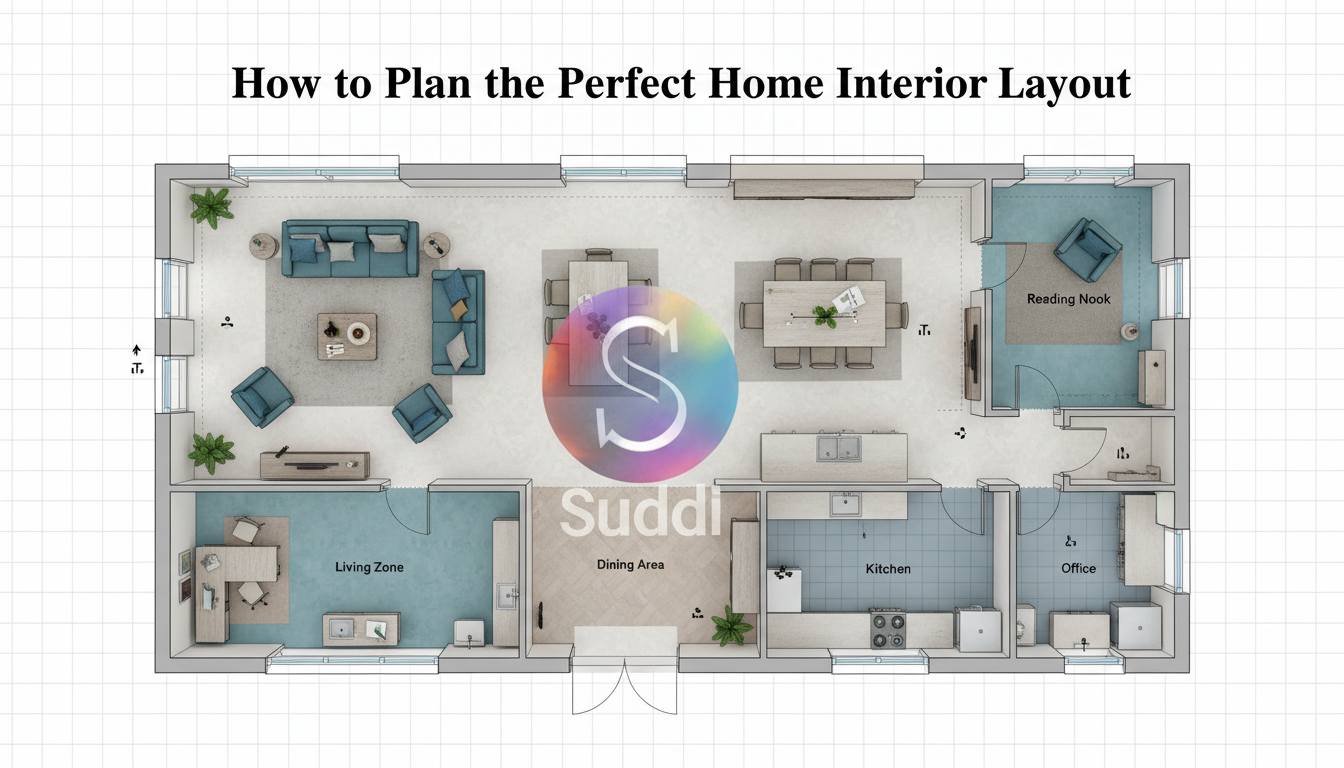
Creating the perfect home interior layout goes beyond just picking furniture and colors. A well-planned layout enhances comfort, maximizes space, and improves the flow of your home. Whether you’re moving into a new house, renovating, or simply refreshing your interiors, thoughtful planning is essential to ensure your space is functional, stylish, and inviting.
For more tips, tools, and design inspiration, visit https://suddl.com/ — your go-to resource for designing beautiful and practical home interiors.
1. Understand Your Space
Before making any design decisions, it’s crucial to understand your space. Each room has its unique dimensions, lighting, and potential.
- Measure everything: Note wall lengths, ceiling heights, window placements, and doorways.
- Identify focal points: Determine which elements, like a fireplace, window, or architectural feature, will anchor the room.
- Consider traffic flow: Ensure pathways are clear and intuitive to move around comfortably.
Knowing your space inside out is the foundation for a successful layout.
2. Define Your Needs
Every home serves a different lifestyle. Defining what you need from each room ensures the layout works for you.
Questions to Consider:
- How many people use the space daily?
- Do you need separate areas for work, relaxation, or entertainment?
- How much storage is required?
- Are there multi-functional needs, like a guest room doubling as an office?
Understanding these needs guides furniture placement, zoning, and design priorities.
3. Choose the Right Layout Style
Room layouts generally fall into a few categories, each suited for different spaces and purposes.
Common Layouts:
- Open-plan: Great for small or modern homes, combining kitchen, dining, and living areas into a flowing space.
- Zoned layout: Uses furniture, rugs, or screens to define distinct functional areas without walls.
- Symmetrical layout: Perfect for formal rooms, arranging furniture evenly around a focal point for balance.
- Asymmetrical layout: Ideal for casual living spaces, giving a relaxed and dynamic feel.
Selecting the right layout ensures both comfort and aesthetic appeal.
4. Prioritize Functionality
Functionality should be the backbone of any layout. A beautiful room is useless if it doesn’t serve its purpose.
- Seating: Arrange sofas and chairs for conversation and clear sightlines to focal points like TVs or fireplaces.
- Dining areas: Allow at least 36 inches around tables for movement.
- Workspaces: Ensure proper lighting, proximity to power outlets, and minimal distractions.
A functional layout reduces frustration and makes your home more enjoyable to live in.
5. Maximize Space with Smart Furniture
Furniture plays a major role in interior layout. The right pieces can open up space, while oversized or ill-placed items can make a room feel cramped.
Furniture Tips:
- Multi-functional pieces: Sofa beds, extendable tables, and ottomans with storage save space.
- Scale appropriately: Measure furniture to ensure it fits without overcrowding.
- Floating furniture: Moving seating away from walls can improve flow in certain layouts.
Smart furniture choices allow your space to feel both open and cozy.
6. Create Zones
Especially in open-plan homes, zoning is essential to define spaces without building walls.
- Rugs: Use different rugs to separate seating from dining areas.
- Lighting: Pendant lights over dining tables or floor lamps in seating areas create visual separation.
- Furniture placement: Sofas or bookcases can act as subtle dividers.
Zones make your home feel organized, functional, and visually appealing.
7. Optimize Traffic Flow
Good interior layout ensures smooth movement through your home. Poor flow leads to clutter, frustration, and inefficient use of space.
- Keep pathways clear and at least 2–3 feet wide.
- Avoid blocking doors, windows, or high-traffic areas with furniture.
- Consider circulation patterns before placing large pieces.
Planning traffic flow early saves costly rearrangements later.
8. Balance Aesthetics and Comfort
While functionality is important, your home should also feel beautiful and inviting. Balance is key.
- Align furniture with natural focal points like fireplaces, large windows, or artwork.
- Use symmetry for formality or asymmetry for a relaxed vibe.
- Mix textures and materials to add visual interest.
A balanced layout combines comfort and style seamlessly.
9. Lighting and Natural Light Considerations
Lighting significantly impacts how a space feels and functions. Layout planning should consider both natural and artificial lighting.
- Maximize daylight by positioning seating and workspaces near windows.
- Layer lighting: ambient, task, and accent lights for versatile use.
- Avoid placing furniture in ways that block natural light sources.
Well-planned lighting enhances the room’s functionality and warmth.
10. Plan Storage Solutions
Storage is essential for a functional and organized home. Incorporate storage into your layout to reduce clutter and maintain a clean aesthetic.
- Built-in shelving or cabinets along walls maximize space.
- Multipurpose furniture with hidden storage, like ottomans or beds with drawers, is ideal.
- Vertical storage, such as tall bookshelves, draws the eye upward and frees floor space.
Strategic storage keeps your interior layout functional and visually appealing.
11. Incorporate Flexibility
Life changes, and your home layout should adapt. Flexible design ensures your interiors remain practical as needs evolve.
- Use modular furniture that can be rearranged.
- Leave open spaces for potential future use.
- Consider movable partitions or room dividers for temporary changes.
Flexible layouts provide long-term usability without major renovations.
12. Final Touches and Personalization
Once your layout is functional, add personal touches to make your home uniquely yours.
- Display artwork, photos, or décor items that reflect your personality.
- Use rugs, cushions, and throws to add color, texture, and warmth.
- Incorporate plants for life and freshness.
Personalization completes a layout, turning it into a home that is both stylish and welcoming.
Conclusion
Planning the perfect home interior layout requires a balance of functionality, aesthetics, and comfort. By understanding your space, defining needs, choosing the right layout, and prioritizing flow, you can create a home that is efficient, beautiful, and inviting. Smart furniture choices, zoning, lighting, and personalized touches ensure your home meets both practical and stylistic goals.
For more expert tips, layout inspiration, and home design solutions, visit https://suddl.com/. Start planning your perfect home today and turn your living space into a functional and stylish haven.