
Healthy Daily Routine for Kids: A Complete Parent’s Guide
1. Starting the Day Right: Morning Habits That Build Success




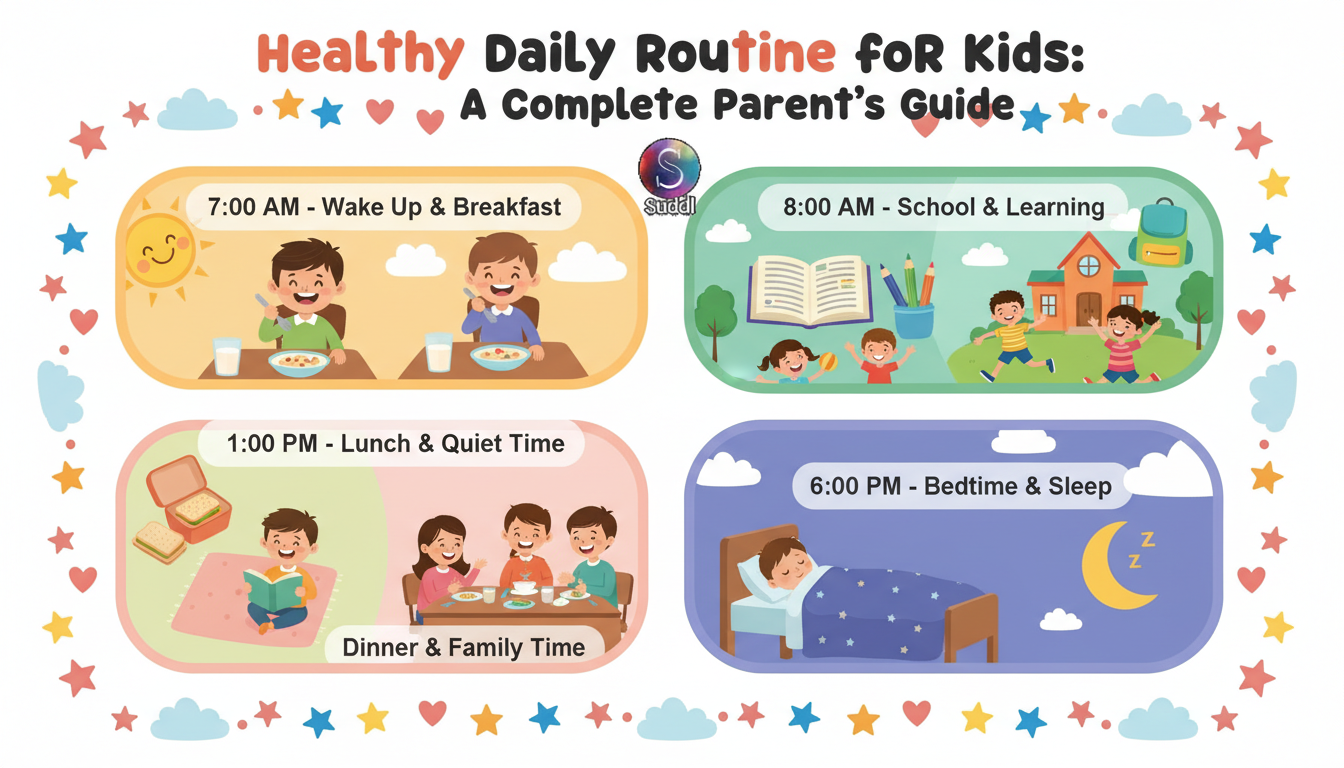
A healthy daily routine begins with a structured and positive morning. The way children start their day often sets the tone for everything that follows. Waking up at a consistent time helps regulate their internal body clock and improves mood, focus, and energy levels. Encourage kids to begin with simple self-care habits such as brushing their teeth, washing their face, and making their bed. These small responsibilities build independence and confidence over time. A nutritious breakfast is essential for fueling young bodies and minds. Include balanced options like eggs, whole-grain toast, fruits, yogurt, or oatmeal to provide lasting energy. Avoid sugary cereals or processed snacks that can lead to energy crashes later in the day. Adding a few minutes of light stretching or playful movement in the morning can also boost circulation and alertness. Preparing school bags and outfits the night before reduces stress and keeps mornings calm. When mornings are organized and encouraging, children feel secure and ready to learn. Establishing consistent morning habits teaches discipline while creating a warm family atmosphere. For more parenting inspiration and family lifestyle ideas, visit https://suddl.com/ and explore helpful guides designed for modern families.
2. Productive Days: Learning, Play, and Balanced Screen Time




During the day, balance is the key to a healthy routine. Children thrive when their schedules include time for learning, creativity, physical activity, and relaxation. School hours naturally focus on education, but learning should not feel overwhelming. Encourage short breaks between homework tasks to prevent mental fatigue. Reading together, practicing writing, solving puzzles, or engaging in creative crafts can make learning enjoyable and interactive. Physical activity is equally important. At least 60 minutes of active play each day—whether cycling, running, dancing, or playing sports—supports strong bones, healthy weight, and emotional well-being. Outdoor play also improves mood and reduces stress. In today’s digital age, screen time must be managed carefully. While educational programs and apps can be beneficial, set clear limits and ensure devices do not replace real-world interaction. Creating screen-free zones during meals or before bedtime encourages meaningful family conversations. Healthy snacks such as fruits, nuts, smoothies, or sandwiches keep energy steady throughout the day. By maintaining a balanced schedule of study, movement, and relaxation, parents can help children develop positive habits that last a lifetime. Discover more family-friendly ideas and parenting tips at https://suddl.com/ to support your child’s daily growth.
3. Afternoon and Evening: Family Time and Healthy Meals




Afternoons and evenings offer valuable opportunities for connection and reflection. After school, children may need downtime to relax and recharge. Allowing quiet activities such as drawing, reading, or listening to music helps them transition from busy school hours to home life. Dinner time is one of the most important parts of a healthy routine. Eating together as a family strengthens bonds and encourages open communication. Serve balanced meals that include vegetables, lean proteins, whole grains, and healthy fats. Involving kids in meal preparation teaches life skills and promotes healthier food choices. After dinner, homework time should be structured but supportive. Offer guidance without completing tasks for them, fostering independence and problem-solving skills. Limiting late-evening sugary snacks prevents sleep disruptions. Family activities such as board games, storytelling, or simple conversations create positive memories and emotional security. A consistent evening routine builds predictability, helping children feel safe and cared for. By prioritizing healthy meals and quality family interaction, parents nurture both physical and emotional well-being. For more lifestyle inspiration and practical parenting advice, explore resources available at https://suddl.com/ and strengthen your family’s daily rhythm.
4. Bedtime Routine: Rest, Reflection, and Preparation for Tomorrow


A structured bedtime routine is essential for a child’s overall health and development. Adequate sleep supports brain function, emotional regulation, and physical growth. Depending on age, most children need between 9 to 12 hours of sleep per night. Establishing a consistent bedtime helps regulate natural sleep cycles and reduces bedtime resistance. Begin the nighttime routine with calming activities such as warm baths, brushing teeth, and changing into comfortable pajamas. Reading a bedtime story or sharing a few minutes of gratitude reflection strengthens emotional bonds and encourages positive thinking. Avoid screens at least one hour before bed, as blue light can interfere with melatonin production and delay sleep. Keep the bedroom environment quiet, dark, and comfortable to promote restful sleep. Preparing school items, clothes, and lunches for the next day reduces morning stress and fosters responsibility. Ending the day with affection, encouragement, and reassurance gives children a sense of stability and love. A consistent bedtime routine ensures that kids wake up refreshed, focused, and ready for new challenges. By maintaining healthy sleep habits, parents set the foundation for long-term wellness and happiness. For more expert parenting tips and daily routine inspiration, visit https://suddl.com/ and continue building a healthier family lifestyle.