
Dining Room Decor Ideas That Make Every Meal Feel Special
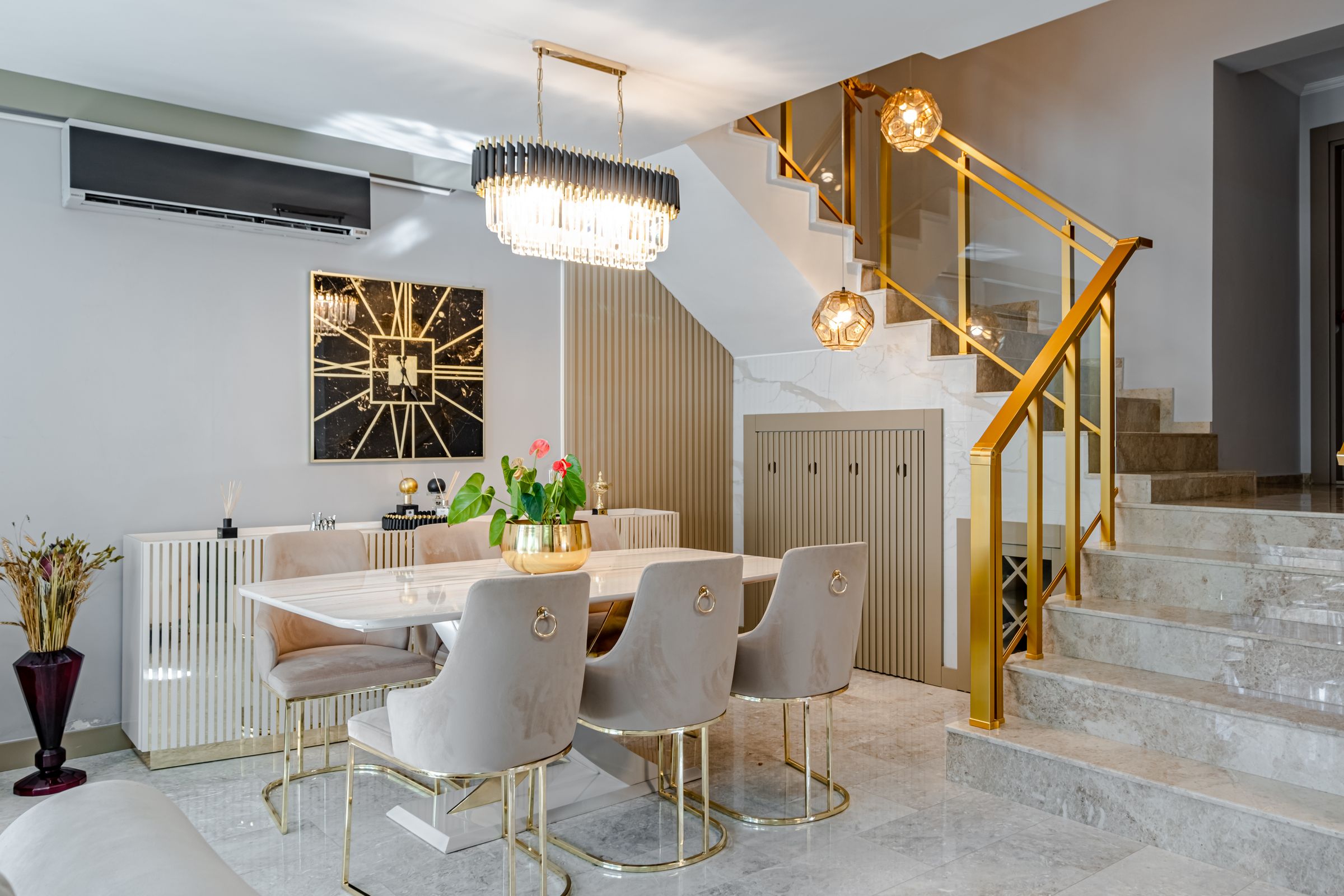
The dining room is where the everyday and the special-occasion versions of your home overlap — it needs to work for a rushed weeknight dinner and still feel right when people come over. A handful of deliberate choices in scale, lighting, and layering make the difference between a room that just holds a table and one that actually gets used.
Wondering what size dining table fits your room? Try our free Dining Table Size Calculator.
Get the Table Size and Shape Right
The single biggest mistake in a dining room is a table that’s wrong for the space — too large and the room feels cramped with no walking room around chairs; too small and it reads as an afterthought. As a rule of thumb, leave at least 36 inches of clearance between the table edge and the nearest wall or furniture. Rectangular tables suit long, narrow rooms, while round or oval tables often work better in square spaces and make it easier to fit an extra guest.
Layer Lighting Over the Table
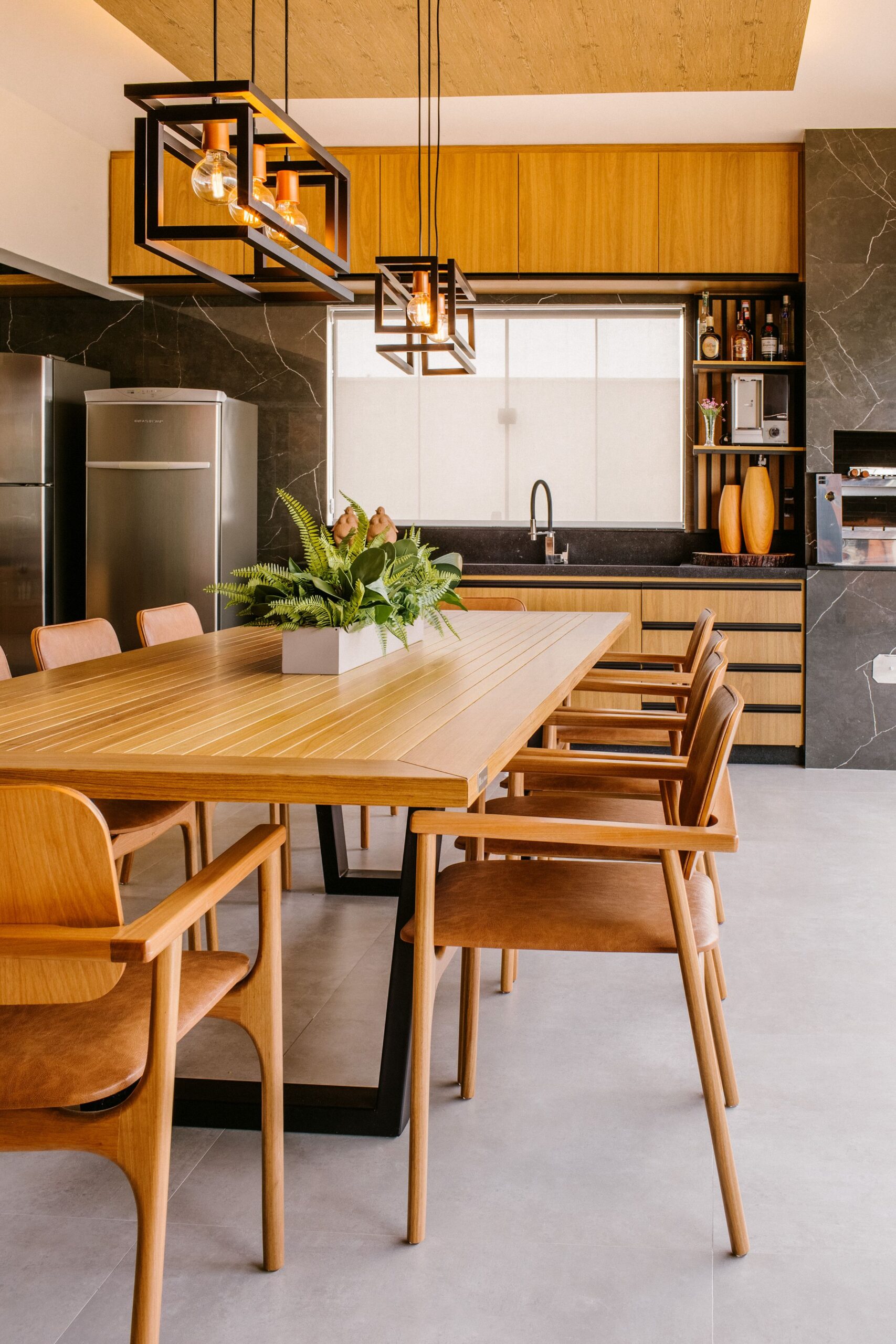
A single overhead fixture centered above the table does more visual work than almost anything else in the room. Hang it so the bottom sits roughly 30–34 inches above the tabletop — low enough to feel intimate, high enough that no one is ducking around it. A dimmer switch is worth adding if you don’t have one; it’s the easiest way to shift the room from bright weeknight-dinner mode to soft evening mode.
Mix In Some Chair Variety
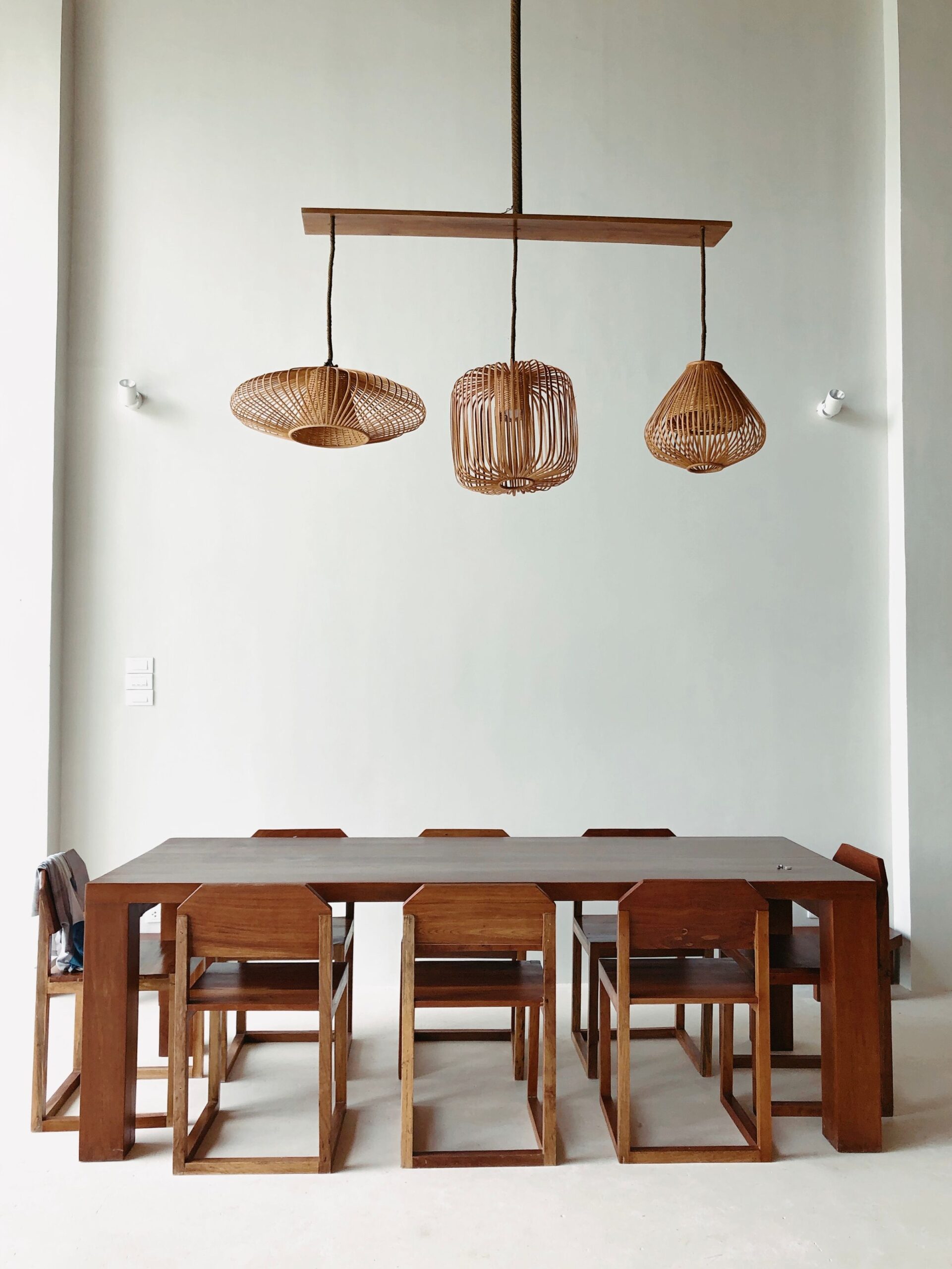
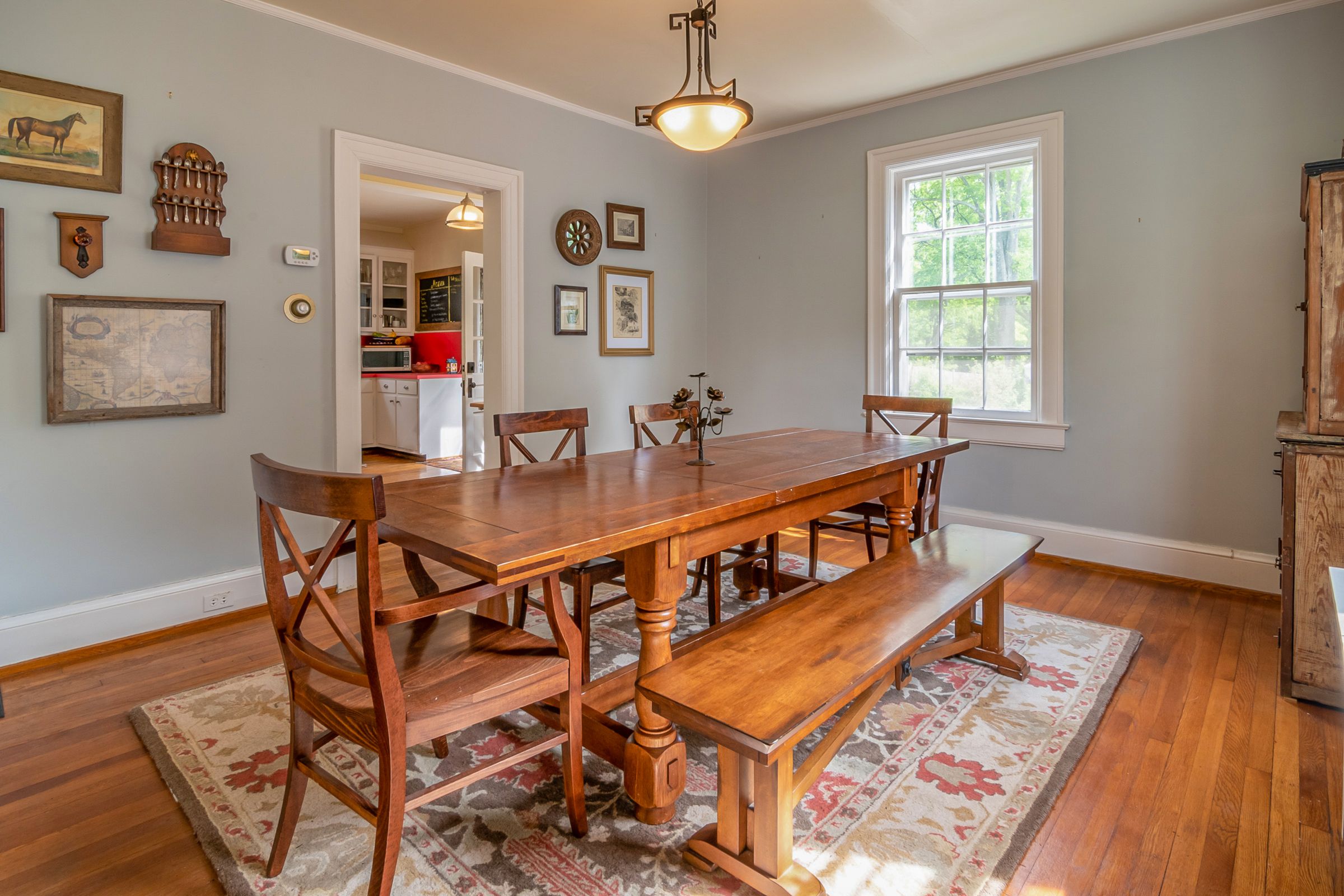
A full matching dining set can feel stiff. Pairing your main chairs with two captain’s chairs in a different but complementary style at the head of the table — or mixing a bench on one side — adds visual interest without looking mismatched. The trick is keeping a shared thread, whether that’s wood tone, color, or overall silhouette, so the variety reads as intentional rather than accidental.
Ground the Room With a Rug
A rug under the dining table adds warmth and helps define the space, especially in an open-plan layout where the dining area isn’t boxed in by walls. Size it so all four chairs stay on the rug even when pulled out — as a general guide, that means at least 24–30 inches of rug beyond each edge of the table. A low pile or flat-weave rug is easier to keep clean under a spot prone to spills.
Add a Sideboard for Storage and Display
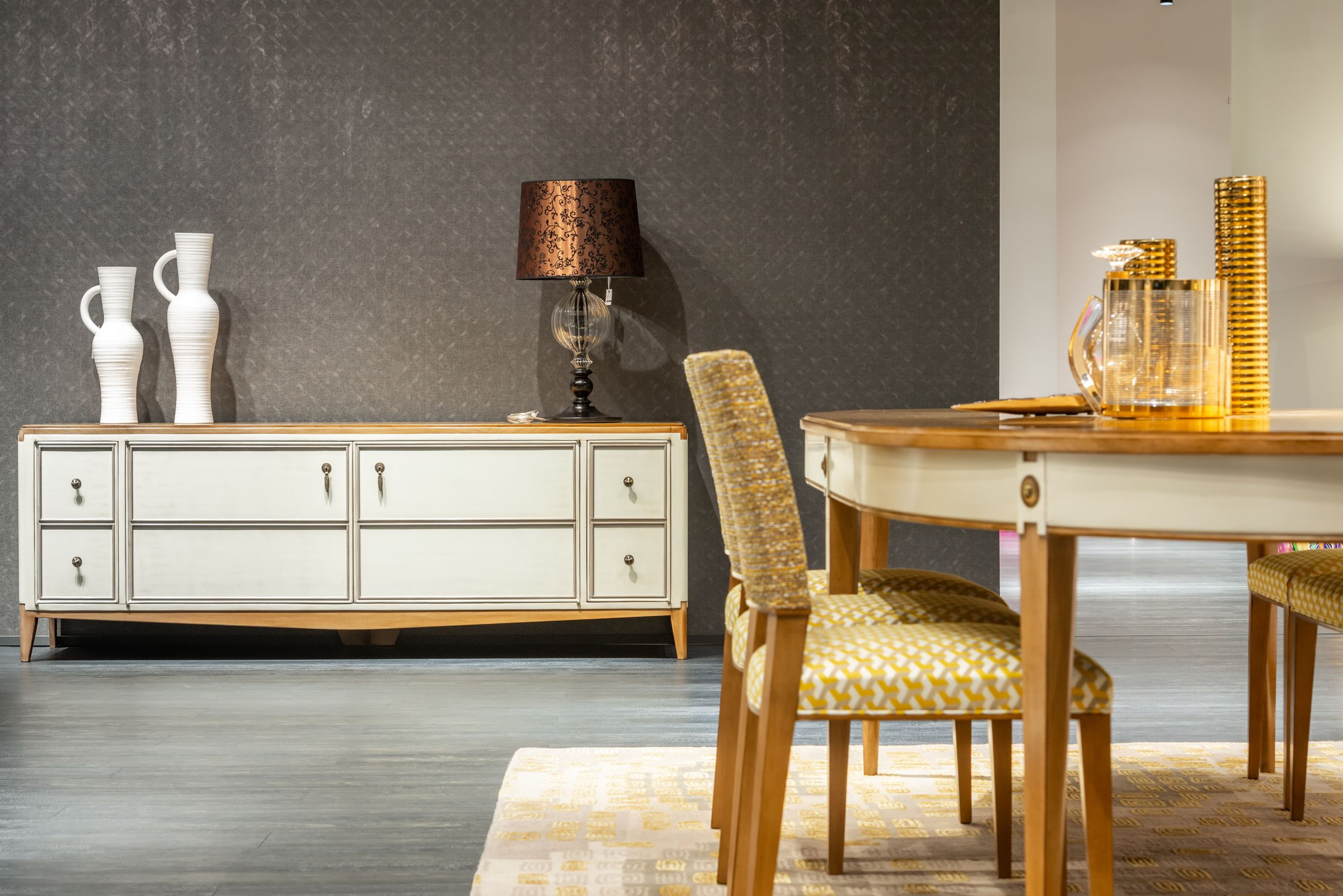
A sideboard or buffet solves two problems at once: it gives you closed storage for linens, serveware, and extra chairs, and an open surface for a lamp, a stack of plates, or rotating seasonal decor. Placing it along the room’s longest open wall keeps the space from feeling crowded while still putting everything within easy reach of the table.
Bring In a Mirror or Art
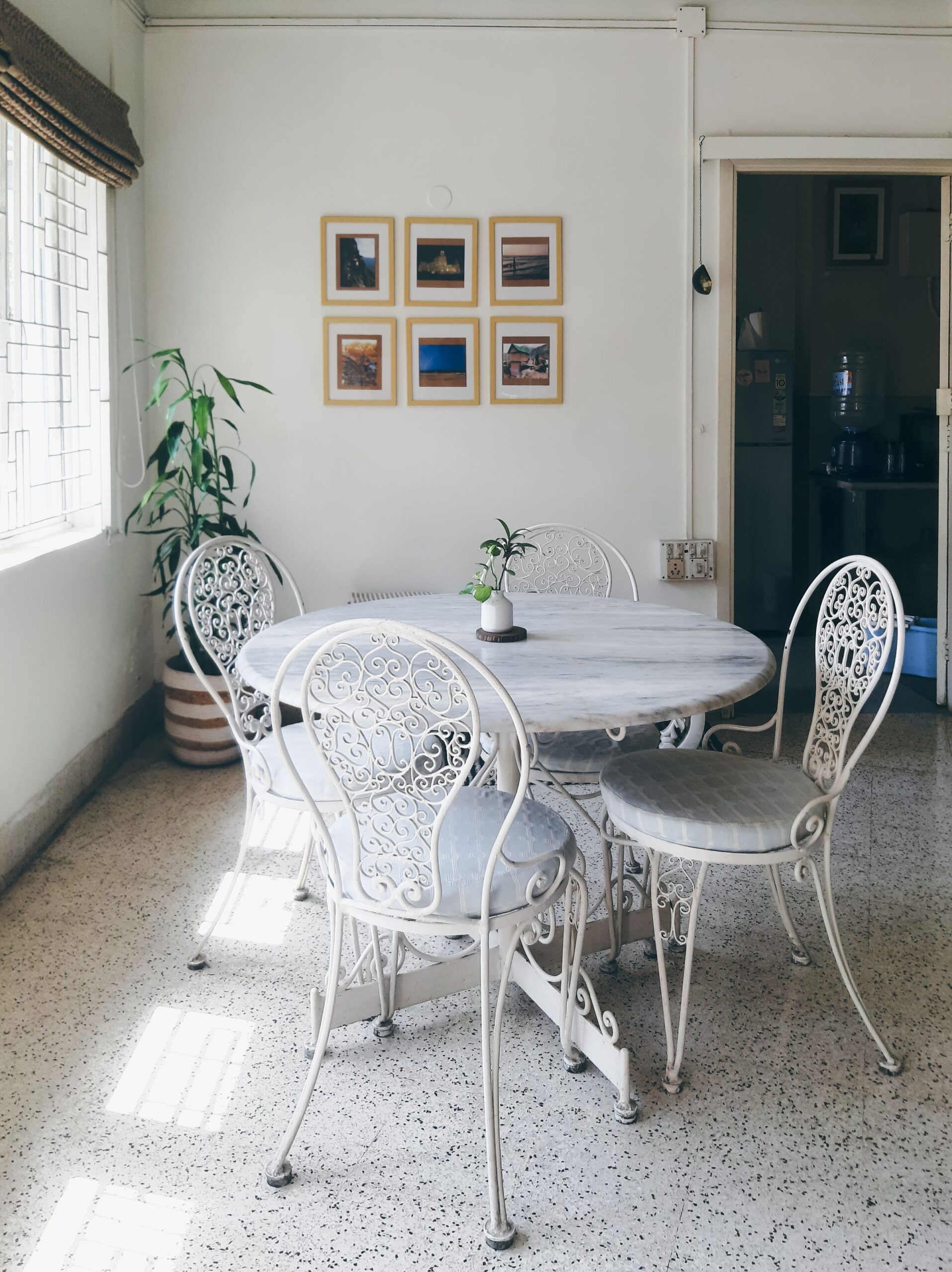
Dining rooms often have one under-used wall, and a large mirror or a single oversized piece of art is the highest-impact way to fill it. A mirror opposite a window also bounces natural light back into the room, which matters most in dining rooms that don’t get much sun during the day.
Style a Simple Centerpiece
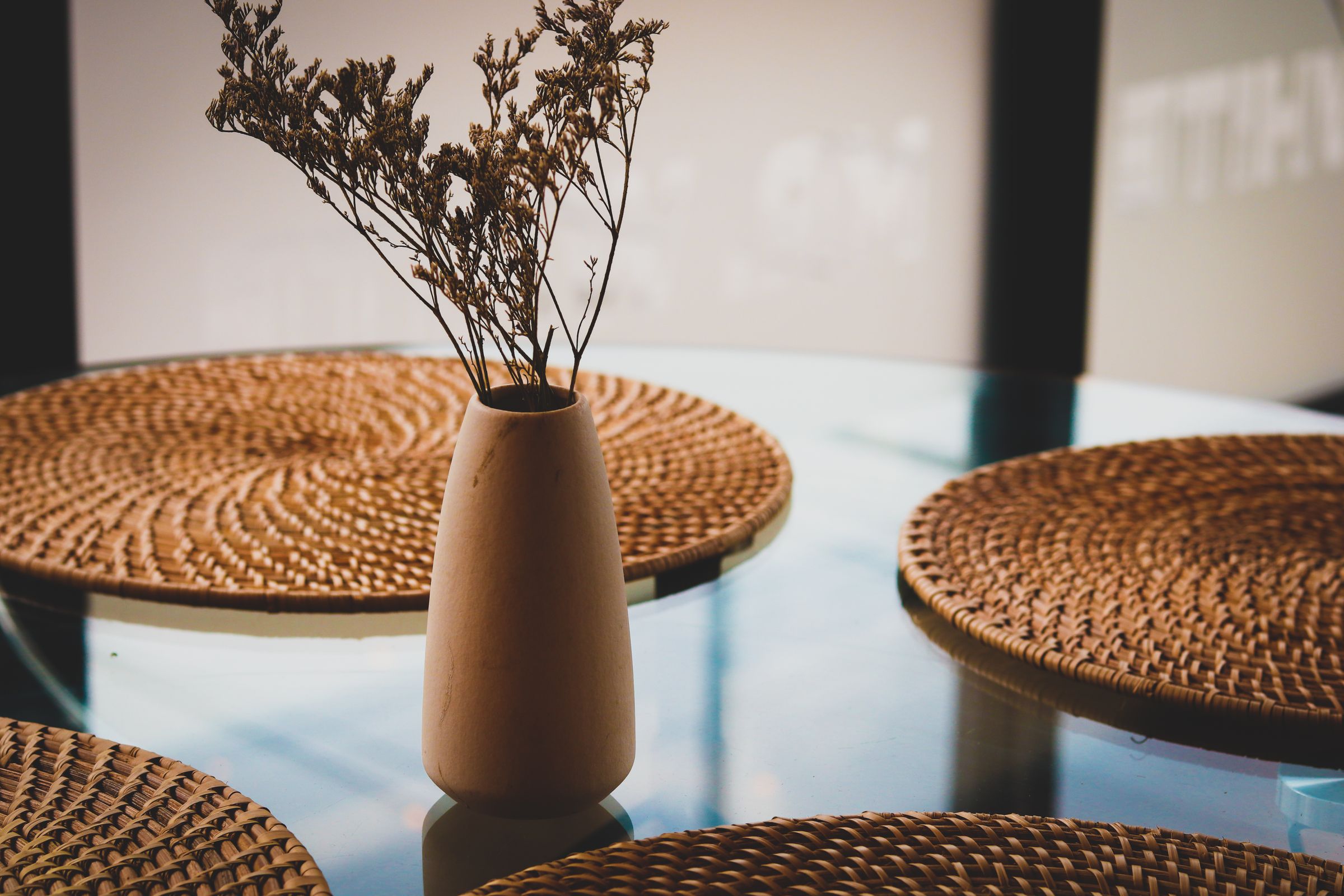
An empty table can make even a well-decorated dining room feel unfinished, but an overly elaborate centerpiece gets in the way of actually eating. A low runner with a cluster of candles or a single low bowl of greenery keeps the table dressed without blocking sightlines across it — as a general rule, keep any centerpiece under 14 inches tall.
Common Dining Room Mistakes
Undersized lighting is one of the most frequent issues — a fixture scaled for a smaller table leaves the ends of a long table dim and uneven. Pushing the table too close to one wall to “save space” is another common trap, since it usually just makes one side unusable. And skipping a rug entirely in an open-plan space can leave the dining area feeling like it doesn’t quite belong to the room around it.
Frequently Asked Questions
How much clearance does a dining table need?
At least 36 inches between the table edge and the nearest wall or furniture, so chairs can be pulled out and people can walk behind them comfortably.
How low should a dining light hang?
Roughly 30–34 inches above the tabletop is the standard range for most ceiling heights.
What size rug should go under a dining table?
Large enough that all four chair legs stay on the rug even when pulled out — usually 24–30 inches beyond each edge of the table.
Is it okay to mix dining chairs?
Yes — mixing works well as long as there’s a shared element tying the pieces together, like wood tone or color.
Do I need a rug if my dining room has its own four walls?
It’s optional in a fully enclosed room, but still adds warmth and helps anchor the furniture arrangement.
Final Thoughts
A dining room doesn’t need a full renovation to feel considered — the right-sized table, a properly hung light, and a rug that actually fits the space do most of the work. The rest, like a sideboard or a piece of art, can be added gradually as the room comes together.