
Introduction
Arts and crafts play an important role in a child’s growth and development. From painting colorful pictures to creating simple crafts using paper and glue, these activities allow children to explore their imagination and express their thoughts in unique ways. Arts and crafts are more than just fun activities—they help children build creativity, confidence, and important life skills.
In today’s digital world, children often spend long hours using screens. While technology has benefits, hands-on activities like arts and crafts give children opportunities to think creatively and develop practical skills. When children create something with their own hands, they feel proud of their work and gain confidence in their abilities.
This article explores how arts and crafts help kids develop creativity and why parents and teachers should encourage these activities regularly.
🌈 Encouraging Imagination and Creative Thinking
One of the biggest benefits of arts and crafts is that they encourage imagination. When children draw pictures or make crafts, they use their imagination to create something new. They learn to think beyond what they see and come up with their own ideas.
For example, when a child is given paper, crayons, and glue, there is no single correct way to use them. A child might create a colorful animal, a house, or even an imaginary world. This freedom helps children develop creative thinking skills.
Creative thinking is an important skill that helps children solve problems and think differently. It allows them to approach challenges with new ideas and solutions. Arts and crafts give children the opportunity to explore possibilities without fear of making mistakes.
✂️ Improving Fine Motor Skills
Arts and crafts activities help improve fine motor skills, which are the small movements of hands and fingers. These skills are important for everyday tasks such as writing, tying shoelaces, and using utensils.
Activities like cutting paper with scissors, coloring inside shapes, or threading beads help strengthen hand muscles. When children practice these activities regularly, their hand coordination improves. This makes it easier for them to write neatly and complete school tasks.
Developing fine motor skills also supports independence. Children who can handle small objects confidently feel more capable and less dependent on others.
🧠 Enhancing Problem-Solving Abilities
Arts and crafts encourage children to think critically and solve problems. When creating a craft, children often face small challenges, such as deciding which colors to use or how to fix a piece that does not stick properly.
These situations require children to think carefully and find solutions. For example, if a child wants to build a paper bridge that keeps falling, they may try different methods until it works. This trial-and-error process helps children develop patience and persistence.
Problem-solving skills learned through arts and crafts are useful in many areas of life. They help children handle schoolwork, social challenges, and everyday tasks more effectively.
😊 Boosting Confidence and Self-Expression
Arts and crafts allow children to express their feelings and ideas in creative ways. Some children may find it difficult to express themselves through words, but they can communicate through drawings and crafts.
When children complete a project, they feel proud of their work. Displaying their artwork at home or in the classroom increases their confidence. They feel valued and encouraged to continue exploring their creativity.
Self-expression also helps children understand their emotions. For example, a child may draw pictures that reflect happiness, excitement, or even sadness. This creative outlet supports emotional development and mental well-being.
🎨 Encouraging Creativity Through Play
Play-based learning is an important part of childhood, and arts and crafts are a perfect example of creative play. When children engage in creative activities, they experiment with shapes, colors, and textures.
For example, mixing different colors of paint helps children discover how new colors are formed. Creating crafts from recycled materials encourages them to think creatively about how to reuse items.
Creative play supports imagination and curiosity. It also allows children to explore new interests and hobbies that may continue into adulthood.
👨👩👧 Strengthening Parent-Child Relationships
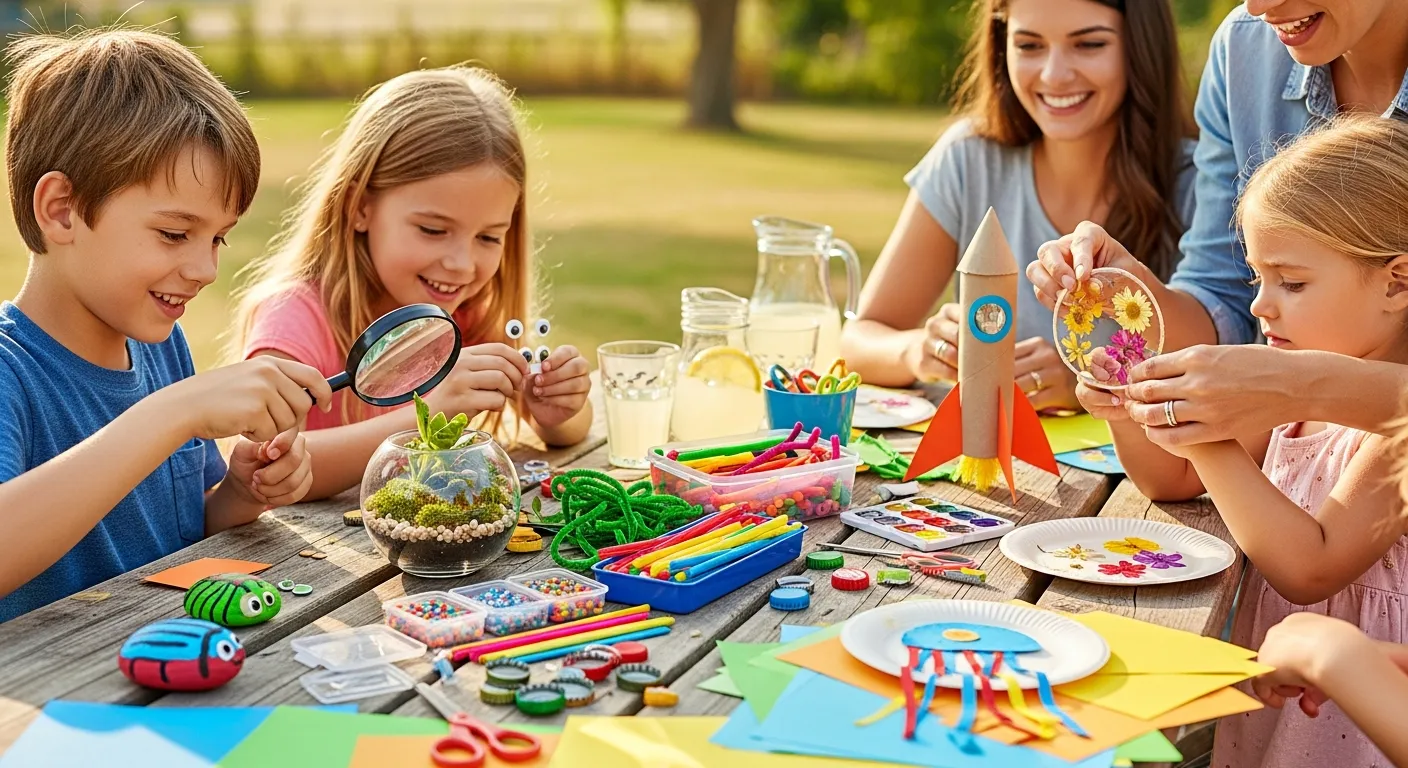
Arts and crafts activities provide an excellent opportunity for parents and children to spend quality time together. Working on projects as a family creates meaningful memories and strengthens relationships.
Parents can guide children while allowing them to make their own choices. This balance encourages independence while providing support. Conversations during creative activities also improve communication between parents and children.
Family craft time helps build trust and emotional bonds. It shows children that their ideas and efforts are valued.
📚 Supporting Academic Skills
Arts and crafts support learning in many academic areas. For example, drawing shapes helps children understand geometry, while measuring materials introduces basic math skills.
Writing letters or words as part of art projects supports language development. Crafting also improves concentration, which helps children focus better in school.
Teachers often use arts and crafts to explain lessons in creative ways. For instance, making models of animals or planets helps children understand science concepts more clearly.
When children enjoy learning through creative activities, they develop a positive attitude toward education.
🌍 Encouraging Cultural Awareness
Arts and crafts also introduce children to different cultures and traditions. Many cultures have unique forms of art, such as traditional patterns, decorations, and handmade crafts.
By learning about cultural arts, children gain respect and appreciation for diversity. They learn that people around the world express creativity in different ways.
For example, making traditional crafts during festivals helps children understand cultural values and history. This awareness promotes empathy and understanding among children.
🧩 Teaching Patience and Focus
Creating crafts requires time and effort. Children must follow steps and complete tasks carefully. This process teaches patience and focus.
For example, completing a puzzle or building a model requires concentration. Children learn to stay focused until the project is finished. This ability to concentrate is important for academic success.
Patience developed through arts and crafts also helps children manage frustration. They learn that mistakes are part of the learning process and can be corrected.
🏡 Easy Arts and Crafts Activities to Try at Home
Parents can encourage creativity by providing simple materials and activities at home. Here are some easy ideas:
- Drawing and Coloring: Provide crayons, markers, and coloring books.
- Paper Crafts: Make greeting cards or simple paper animals.
- Painting: Use watercolor or finger paint for fun art sessions.
- Recycled Crafts: Create toys or decorations from recycled materials.
- Clay Modeling: Use clay to shape animals or objects.
- Collage Making: Combine pictures from magazines to create artwork.
These activities do not require expensive materials. Simple household items can be used to create enjoyable projects.
🌟 Long-Term Benefits of Arts and Crafts
The benefits of arts and crafts extend beyond childhood. Children who engage in creative activities often develop skills that support lifelong success.
Creativity helps individuals think outside the box and solve complex problems. Many successful professionals, including designers, engineers, and scientists, rely on creative thinking.
Arts and crafts also promote emotional well-being. Creative activities reduce stress and provide relaxation. Adults who enjoyed arts and crafts as children often continue creative hobbies later in life.
Encouraging creativity early helps children develop flexible thinking and adaptability—skills that are essential in a changing world.
Conclusion
Arts and crafts play a powerful role in helping kids develop creativity and important life skills. Through simple activities like drawing, cutting, and painting, children learn to imagine, solve problems, and express themselves confidently.
These creative experiences improve fine motor skills, boost confidence, and support academic learning. They also strengthen family relationships and encourage cultural awareness.
Parents and teachers should make arts and crafts a regular part of children’s daily routines. Providing opportunities for creative expression allows children to explore their talents and discover new interests.
In the end, arts and crafts are more than just fun—they are tools that shape creative, confident, and capable individuals. By encouraging children to create and explore, we help them build skills that will benefit them throughout their lives. 🎨✨