
Laundry Room Organization Ideas That Actually Make Sense
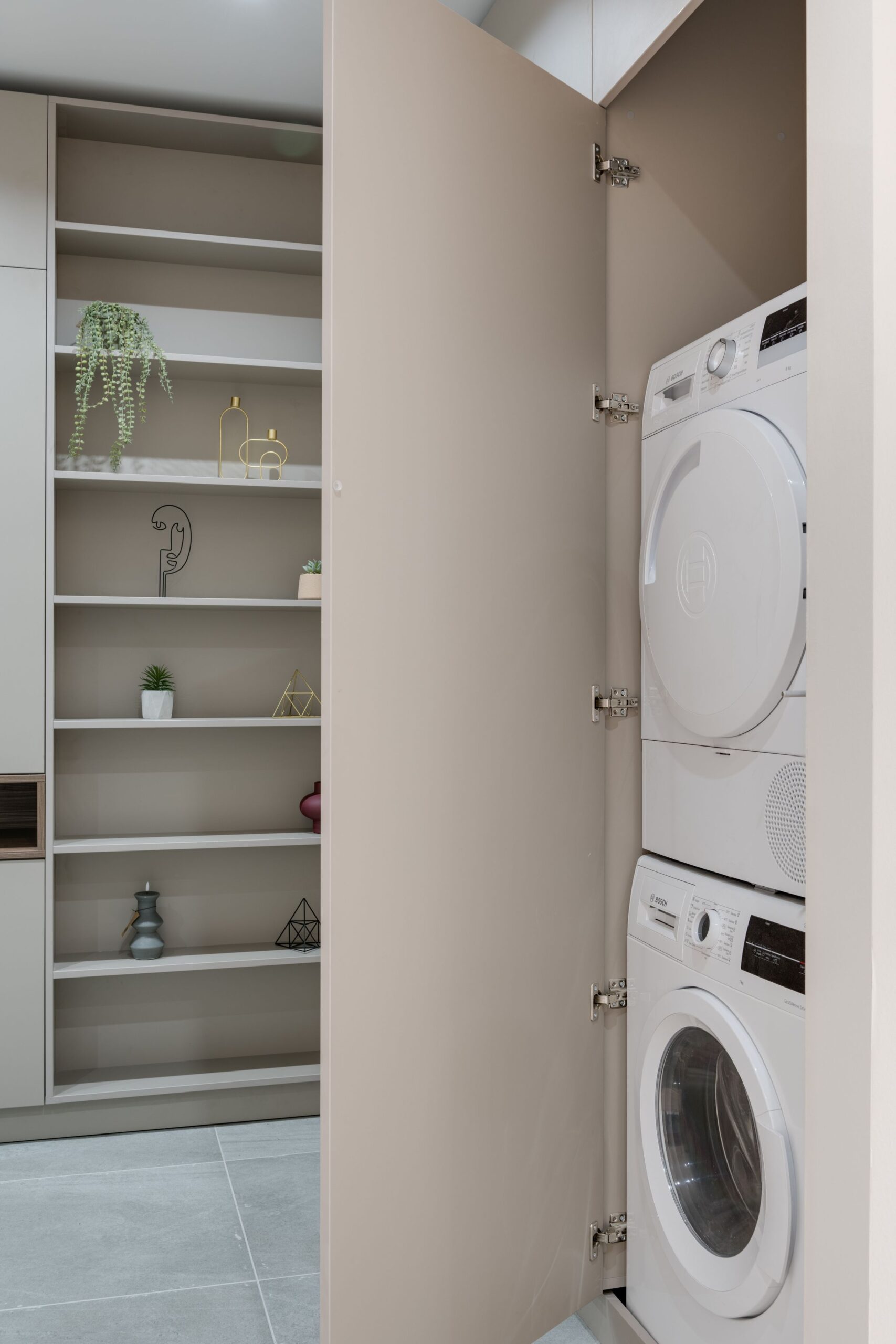
The laundry room rarely gets the same design attention as the rest of the house, but it’s one of the most-used spaces in it. A few practical upgrades — the right storage, a real folding surface, better lighting — turn a cramped utility closet into a room that actually makes the chore easier instead of harder.
Add Closed Storage Above the Machines
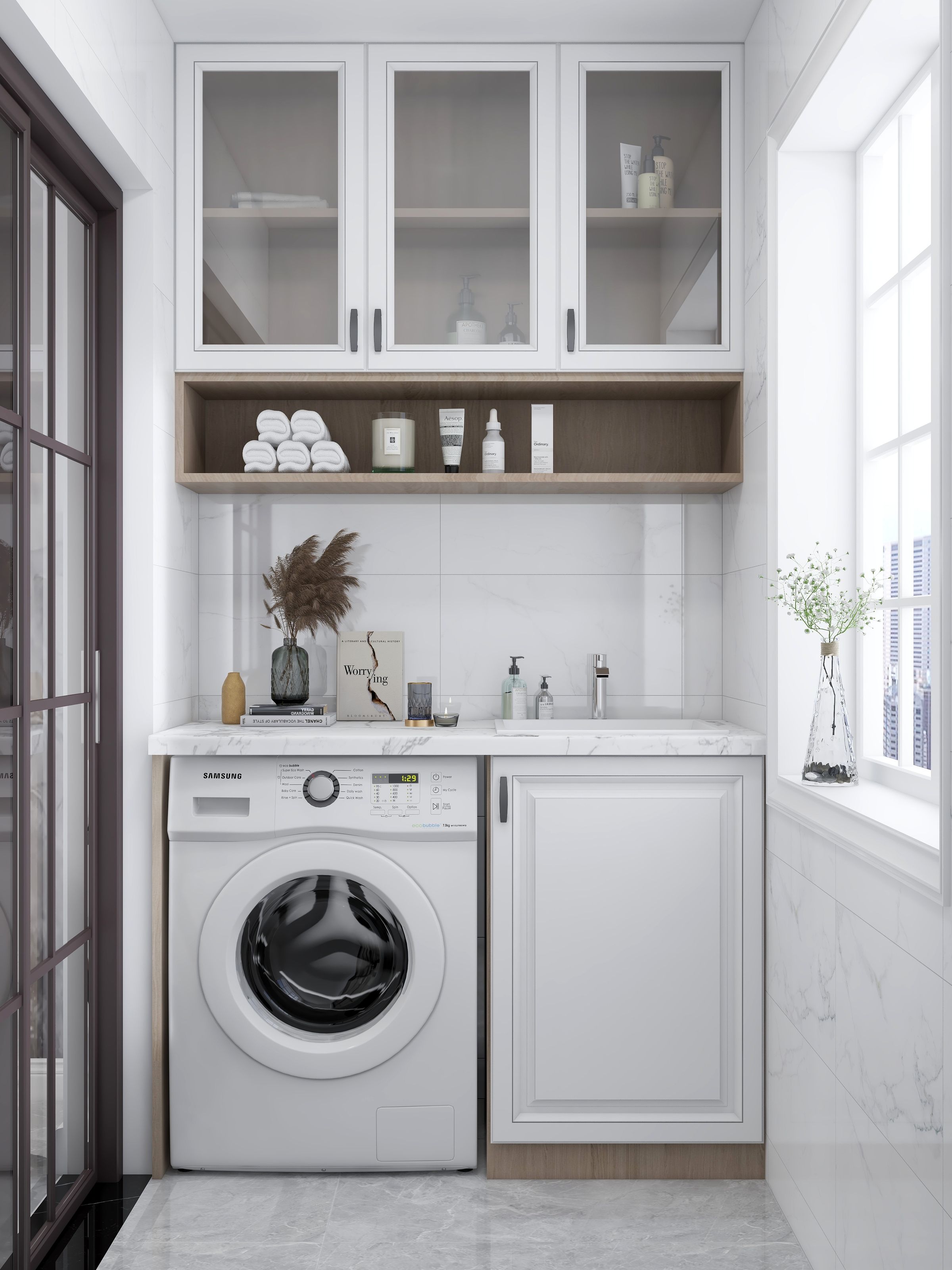
The wall space above a washer and dryer is almost always wasted. A run of closed cabinets keeps detergent, dryer sheets, and cleaning supplies out of sight while giving you a place to store items you don’t want stacked on top of the machines. If cabinets aren’t an option, even open shelving with matching bins reads as intentional rather than cluttered.
Create a Real Folding Surface
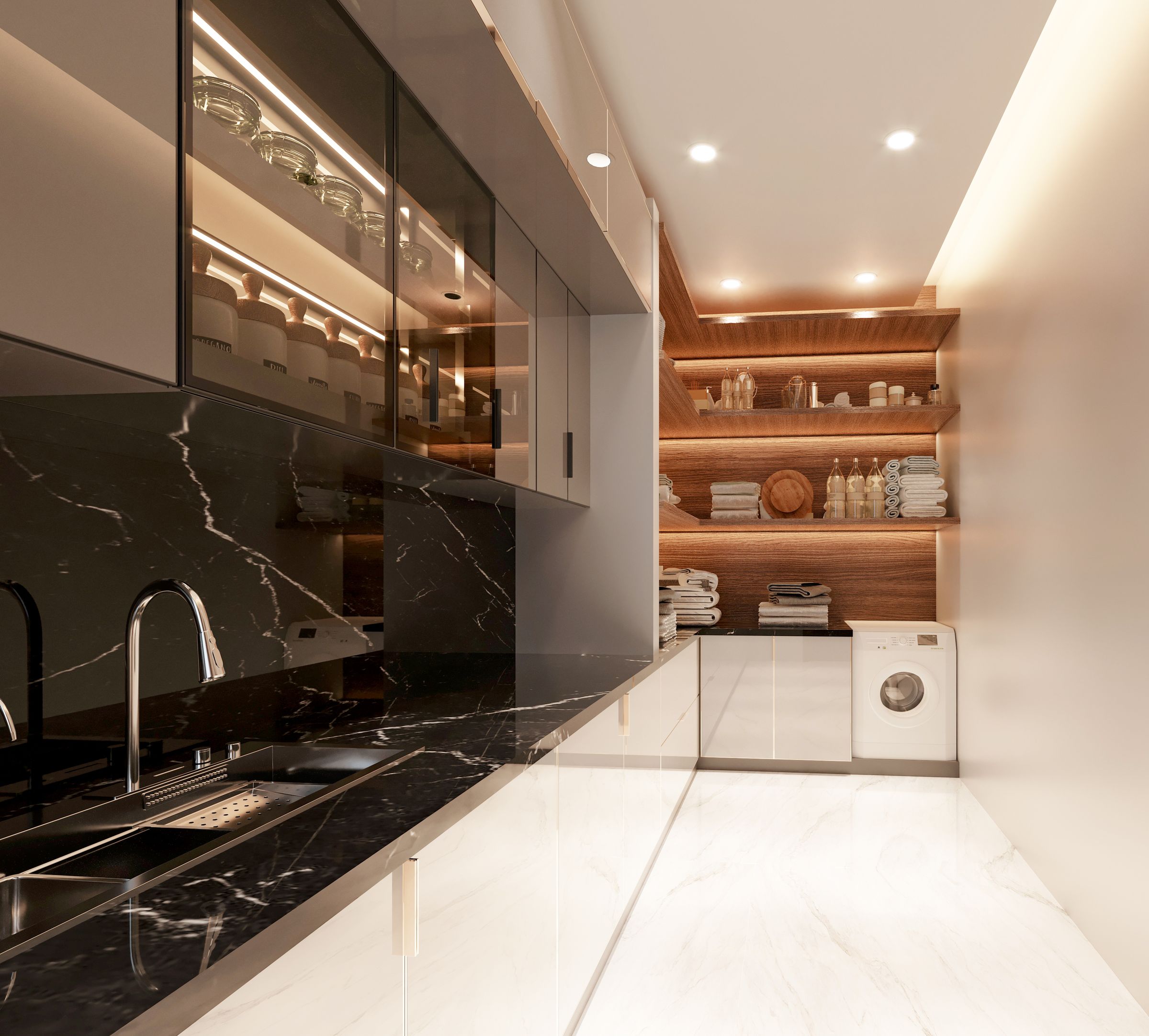
Folding laundry on top of the washer or dryer works, but a dedicated counter — even a narrow 18-inch shelf — makes the whole process faster and less awkward. If space allows, a counter that spans both machines at a consistent height turns the laundry room into a small but functional workstation rather than just a hallway with appliances in it.
Use a Rolling Cart in Tight Spaces
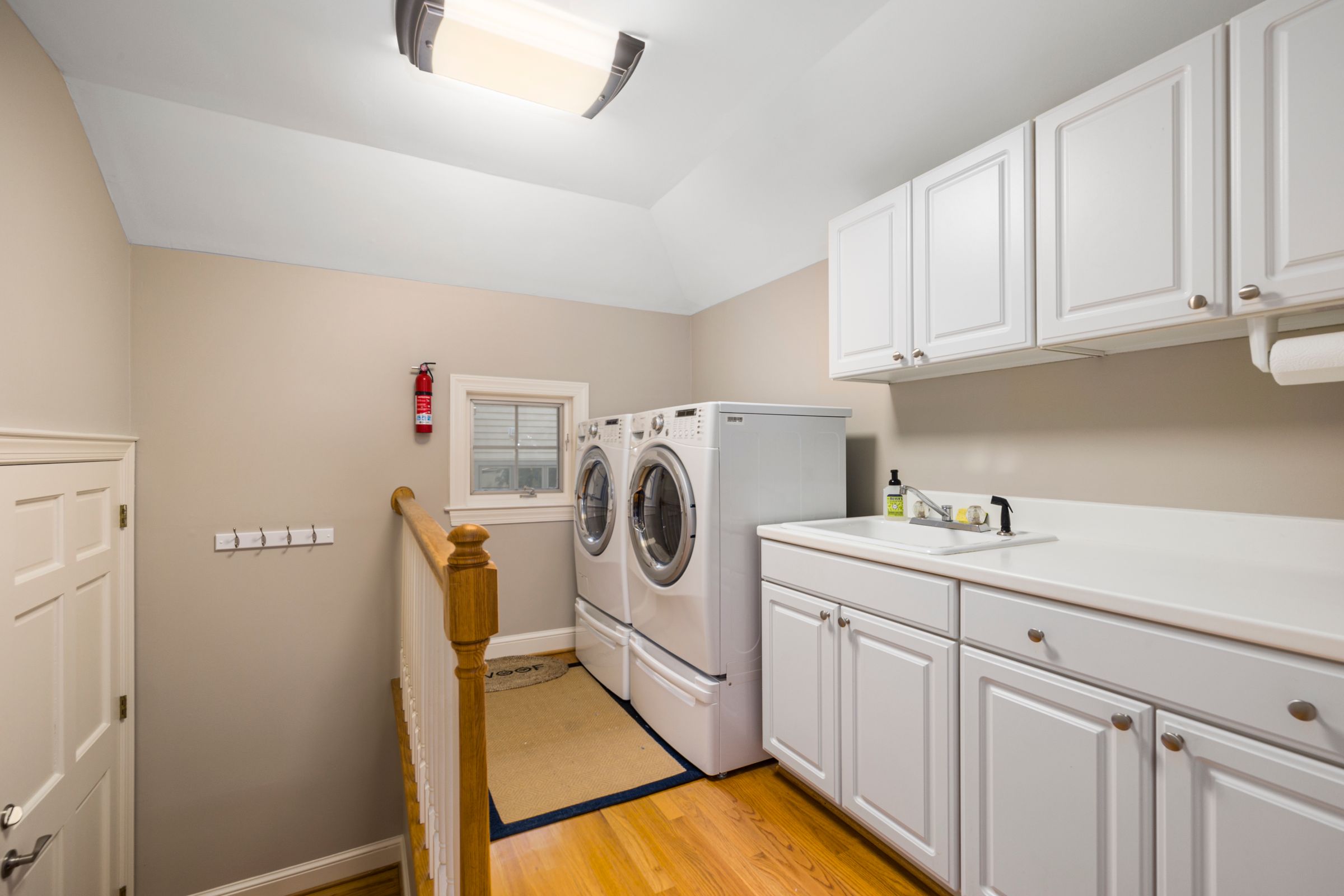
Not every laundry room has room for built-in storage, and that’s where a slim rolling cart earns its keep. It holds detergent, stain remover, and a hamper for sorting, and can be tucked beside the machines or pulled out when needed. The wheels matter more than they seem to — a cart you actually move gets used; one that’s hard to shift becomes another obstacle.
Hang a Drying Rod or Rack
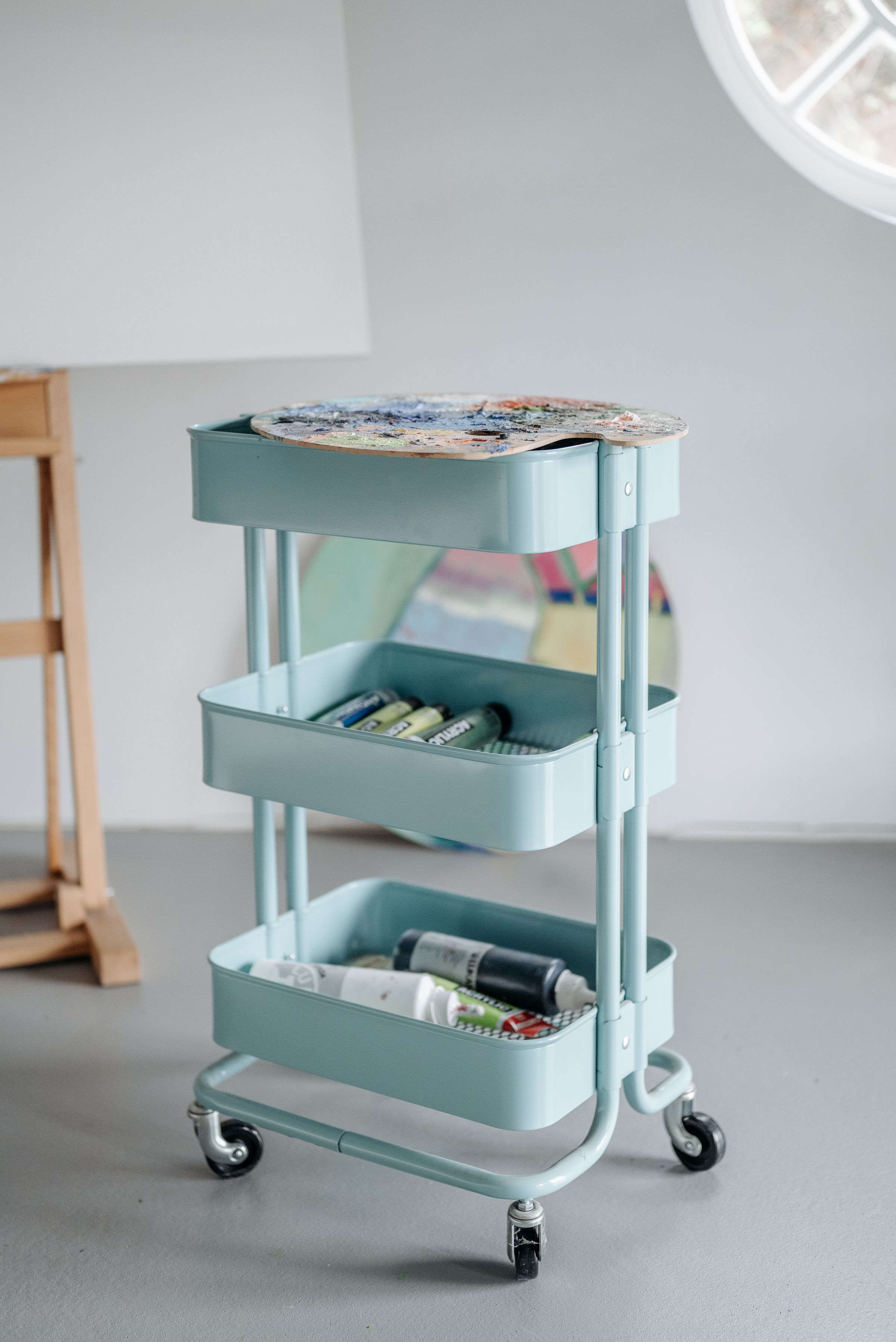
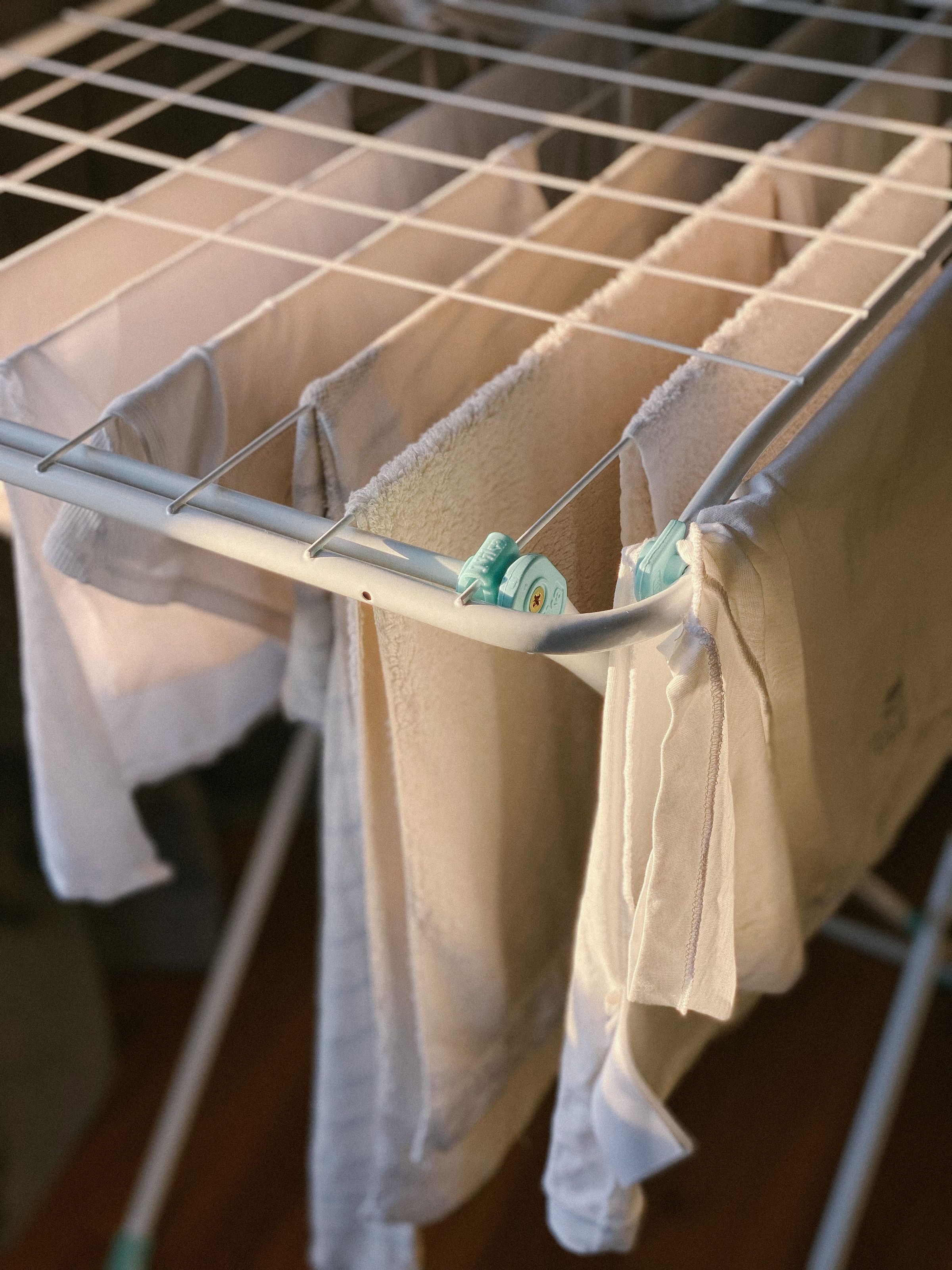
A tension rod mounted just below cabinet height gives you an instant spot to hang shirts straight out of the dryer or air-dry delicates, without needing a full drying rack taking up floor space. Wall-mounted folding racks are worth it in smaller rooms — they fold flat against the wall when not in use and swing out only when needed.
Sort With Labeled Bins
A laundry room without a sorting system tends to become a pile-on-the-floor system. Two or three labeled bins — whites, darks, delicates — placed at an accessible height make sorting a habit rather than a decision every time. Clear or light-colored bins also make it easy to see what’s ready for a load without opening anything.

Add a Utility Sink Where You Can
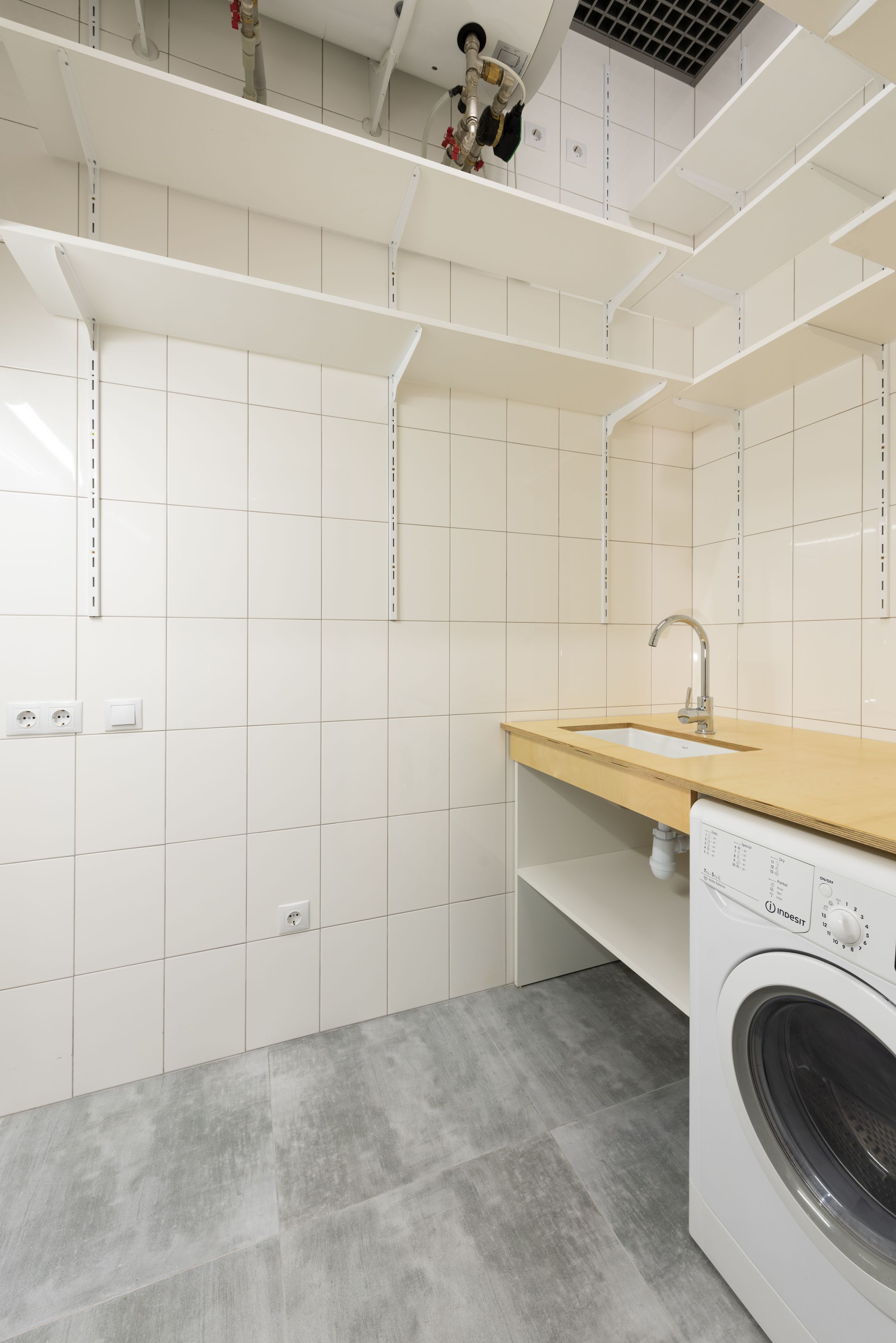
A small utility sink handles hand-washing, stain pre-treating, and rinsing mop heads — tasks that otherwise migrate to the kitchen or bathroom sink. Even a compact single-basin sink tucked into a corner adds real function, and a pull-down faucet makes filling buckets or rinsing larger items much easier.
Light It Properly
Laundry rooms are notorious for a single dim overhead bulb, which makes it hard to spot stains or check that colors haven’t bled. A brighter, whiter bulb — closer to daylight temperature — makes a real difference for actually seeing what you’re working with, and an under-cabinet light strip over the folding counter removes shadows cast by upper cabinets.
Common Laundry Room Mistakes
Skipping a folding surface entirely is the most common one — it turns every load into an awkward pile-and-carry job. Overcrowding open shelves with mismatched bottles is another, since it undoes any organizing effort at a glance. And placing the hamper or sorting bins somewhere inconvenient means clothes end up on the floor instead, no matter how good the system looks on paper.
Frequently Asked Questions
Do I need a folding counter if my laundry room is small?
Even an 18-inch shelf over a nearby cabinet or a fold-down counter mounted to the wall makes a real difference over folding on top of the machines.
What’s the best way to organize a laundry room with no cabinets?
Open shelving with matching bins, plus a rolling cart for anything that needs to move around, covers most of what cabinets would.
How many sorting bins do I actually need?
Two to three is usually enough — whites, darks, and delicates covers most households without overcomplicating the system.
Is a utility sink worth adding to a small laundry room?
If there’s a corner to spare, yes — it takes pressure off the kitchen and bathroom sinks for stain treating and hand-washing.
What light bulb temperature works best for laundry rooms?
Something closer to daylight (around 5000K) makes it much easier to spot stains and check true colors than a warm, dim bulb.
Final Thoughts
A laundry room doesn’t need a renovation to work better — a real folding surface, a sorting system that’s actually used, and brighter light solve most of what makes the chore feel harder than it needs to be. The rest, like closed storage or a utility sink, can be added as the space allows.