
Living Room Decor Ideas That Instantly Elevate Any Space
Not sure what size rug to buy? Try our free Rug Size Calculator.
A living room doesn’t need a full renovation to feel like a different space. Most of the rooms that look “expensive” on Pinterest are really just a handful of deliberate choices done well — layout, lighting, texture, and a few well-placed pieces. Here’s a practical breakdown of what actually makes a living room feel elevated, without needing to gut it.
Start With the Layout, Not the Furniture
Before buying anything new, look at how the room is currently arranged. A common mistake is pushing every piece of furniture against the walls, which leaves a big empty gap in the middle and makes conversation feel awkward. Floating the sofa a few inches off the wall and angling chairs toward each other creates a more intentional, lived-in feel — even in a small room. If the space allows it, arrange seating so no one has to raise their voice to be heard from across the room; that’s usually the sign of a well-planned layout.
Layer Your Lighting
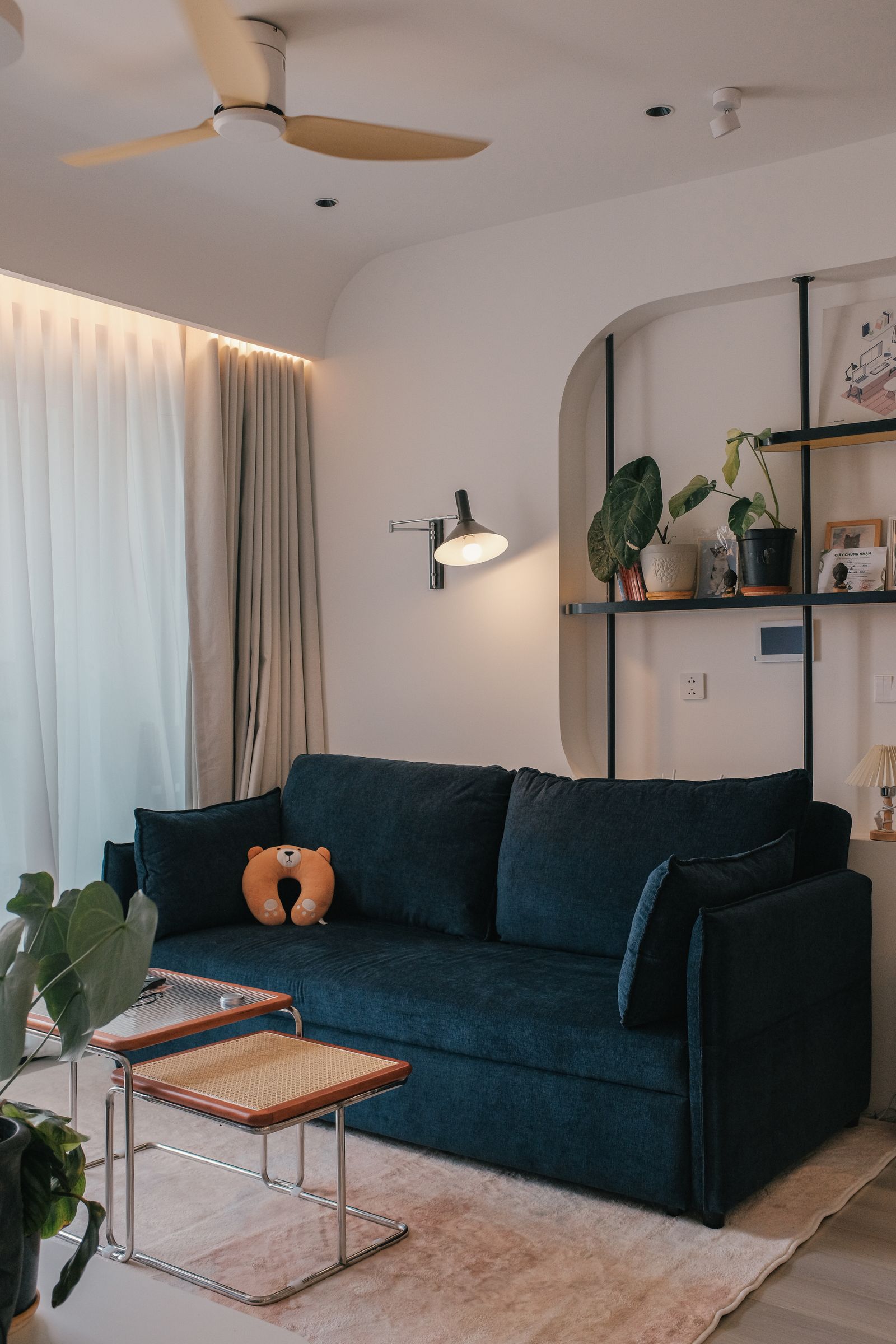
A single overhead light is the fastest way to make any living room feel flat and unfinished. Designers rely on layered lighting instead: ambient light from the ceiling, task lighting near reading chairs, and accent lighting — like a floor lamp in a corner or LED strips behind a media console — to add depth once the sun goes down. Warm bulbs (around 2700K) tend to read as cozier than cool white ones, which can make a living space feel clinical.
Invest in a Few Anchor Pieces
Not every item in the room needs to be expensive, but one or two anchor pieces — a well-made sofa, a substantial coffee table, or a statement rug — set the tone for everything else. Cheaper accent pieces layered around a good anchor piece tend to read as intentional, while a room full of budget furniture with no clear focal point often looks scattered no matter how much is spent overall.
Use a Rug to Define the Space
An undersized rug is one of the most common living room mistakes, and it’s an easy one to fix. As a general rule, the front legs of your sofa and chairs should sit on the rug, not floating off the edge — this visually ties the seating area together instead of making the rug look like an afterthought dropped in the middle of the room. Going one size larger than feels necessary is almost always the right call.
Add Texture Through Textiles
Smooth, matching surfaces everywhere can make a room feel sterile. Mixing textures — a boucle throw pillow next to a leather ottoman, a woven basket beside a glass coffee table — adds visual interest without needing more color or more furniture. Even swapping flat, uniform throw pillows for a mix of sizes and fabrics can noticeably change how finished a sofa looks.
Don’t Skip the Walls
Bare walls are one of the biggest giveaways of an unfinished room. This doesn’t mean filling every inch — a well-placed piece of art, a mirror to bounce light around a darker room, or a gallery wall above the sofa can do more for the space than several smaller decor items scattered on shelves. Hanging art at eye level (roughly 57–60 inches from the floor to the center of the piece) makes a noticeable difference in how professional the room feels.
Bring in Something Alive
Plants — real or convincingly artificial — add a softness that’s hard to replicate with other decor. A large floor plant in an empty corner fills awkward negative space, while smaller plants on shelves or side tables break up hard lines from furniture and electronics. Rooms with no greenery at all often feel slightly stiff, even when everything else is well put together.
Common Living Room Mistakes to Avoid
Beyond an undersized rug and poor lighting, a few other habits quietly undercut an otherwise good room. Too much matching furniture — a sofa, loveseat, and chair all from the same set — can look more like a showroom than a home. Overly small coffee tables get lost next to a large sofa and make the seating area feel unbalanced. And clutter on visible surfaces, even attractive clutter, competes with the pieces actually meant to be focal points.
Frequently Asked Questions
What’s the cheapest way to make a living room look more expensive?
Fixing the rug size and lighting usually has the biggest visual impact for the least cost, since both are common mistakes that are simple to correct without buying new furniture.
How much space should be left for walking around furniture?
Around 30 inches (75 cm) for main walkways is a comfortable standard, though tighter rooms can work with less as long as the path doesn’t feel obstructed.
Should the TV be the main focal point?
It doesn’t have to be. Many well-designed living rooms treat the TV as one element among several, angling seating to work for both conversation and viewing rather than centering everything on the screen.
How many throw pillows is too many?
As a general guide, three to five on a standard sofa tends to look intentional; beyond that, it can start to feel like the pillows are competing with the people meant to sit there.
Is it better to buy furniture in matching sets or mix pieces?
Mixing tends to look more curated. A cohesive color palette or shared material (like matching wood tones) can tie mixed pieces together without needing them to come from the same collection.
Final Thoughts
An elevated living room usually comes down to a series of small, deliberate decisions rather than one big purchase — the right rug size, layered lighting, a couple of anchor pieces, and walls that aren’t left bare. None of it requires a full remodel, and most of it can be done gradually, one fix at a time, without the room ever needing to be torn apart.