
Modern Kitchen Design Ideas for a Stylish, Functional Space
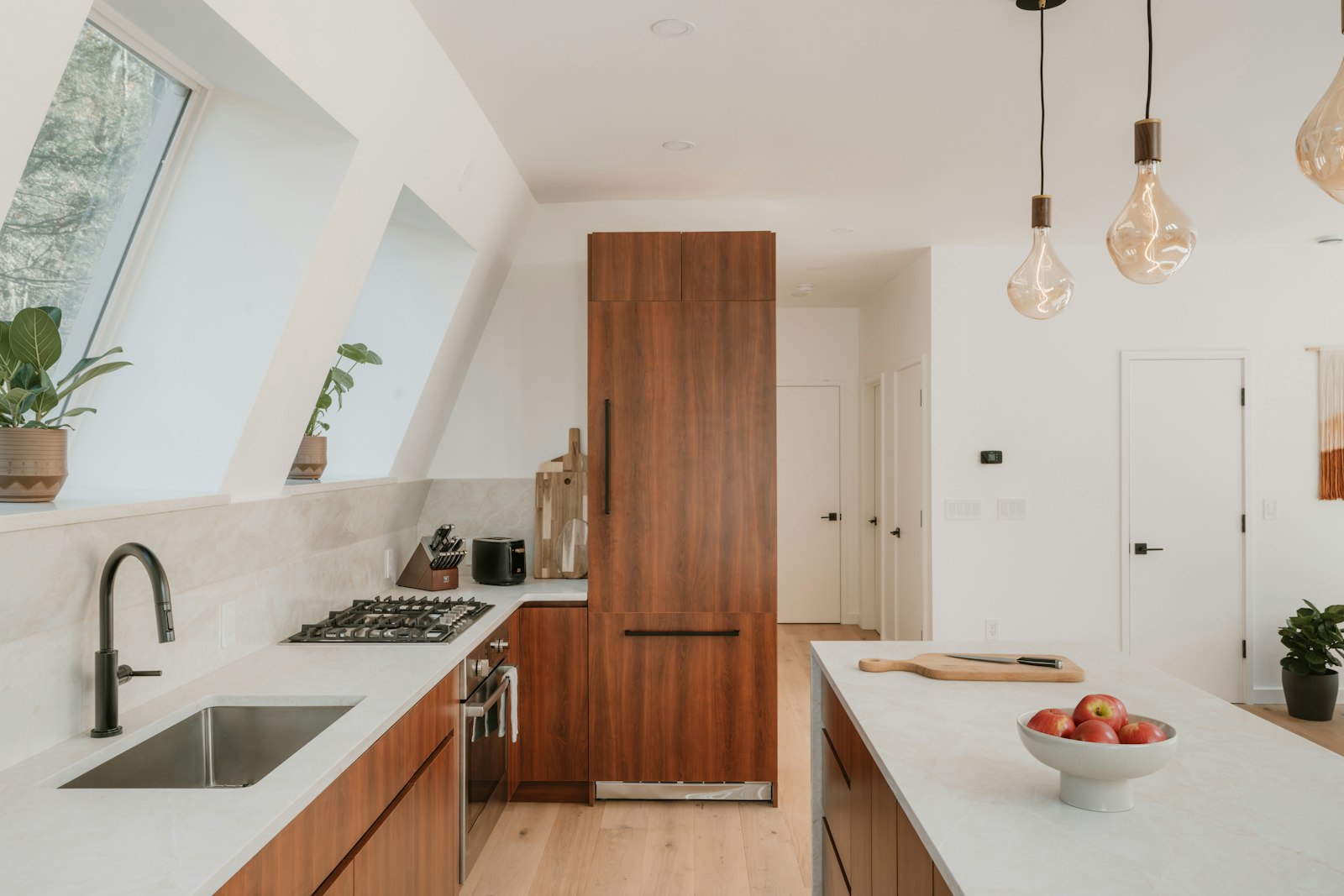
1. Start With a Layout That Matches How You Actually Cook
Before choosing a single finish or fixture, think honestly about how you use your kitchen. Do you cook every night, host frequently, or mostly reheat and go? The classic “kitchen work triangle” — keeping the sink, stove, and refrigerator within easy reach of each other — still holds up because it minimizes wasted steps. If your kitchen is open to a living or dining area, consider adding a peninsula or island to anchor the cooking zone without closing off the room. For galley kitchens, prioritize continuous counter runs on both sides so prep, cooking, and cleanup each have their own stretch of space. A layout that fits your real habits will feel more functional than one chosen for looks alone.
2. Choose a Color Palette That Feels Timeless, Not Trendy
Cabinetry is the biggest visual commitment in any kitchen, so it pays to choose colors you won’t tire of. Soft whites, warm greiges, and sage greens have remained popular because they pair easily with different countertop and hardware choices as trends shift. If you want a bolder look, save it for elements that are cheaper to change later — a painted island, a tiled backsplash, or open shelving — rather than a full wall of cabinets. Two-tone kitchens, where the island differs from the surrounding cabinetry, are a good way to add personality without long-term risk.
3. Let Lighting Do More Than One Job
Good kitchen lighting works in layers. Overhead fixtures handle general illumination, but task lighting — under-cabinet strips, pendant lights over an island, or a sconce near the sink — makes the space genuinely easier to cook in. Warm-toned bulbs (around 2700–3000K) tend to feel more inviting than stark white light, especially in kitchens that open onto living spaces. If your kitchen gets strong natural light during the day, sheer or adjustable window treatments let you control glare without losing brightness.
4. Prioritize Storage You’ll Actually Use
Deep drawers for pots and pans are often more practical than lower cabinets, since you can see everything at a glance instead of digging. Vertical dividers for baking sheets and cutting boards, pull-out spice racks, and a dedicated spot for small appliances all reduce counter clutter. If your kitchen is short on cabinet space, open shelving for everyday dishes or a slim rolling cart can add storage without a renovation. The goal is storage that matches your actual cooking habits, not just what looks tidy in photos.
5. Add Warmth With Texture and Small Details
A kitchen can look expensive without a full remodel by layering in texture: a woven runner, wooden cutting boards left out on the counter, ceramic canisters, or a runner rug near the sink. Hardware is another easy upgrade — swapping builder-grade knobs and pulls for a finish that matches your faucet instantly makes cabinetry feel more considered. Fresh herbs in a simple pot on the windowsill or open shelving styled with a few favorite pieces can make the whole room feel more personal without adding real clutter.