
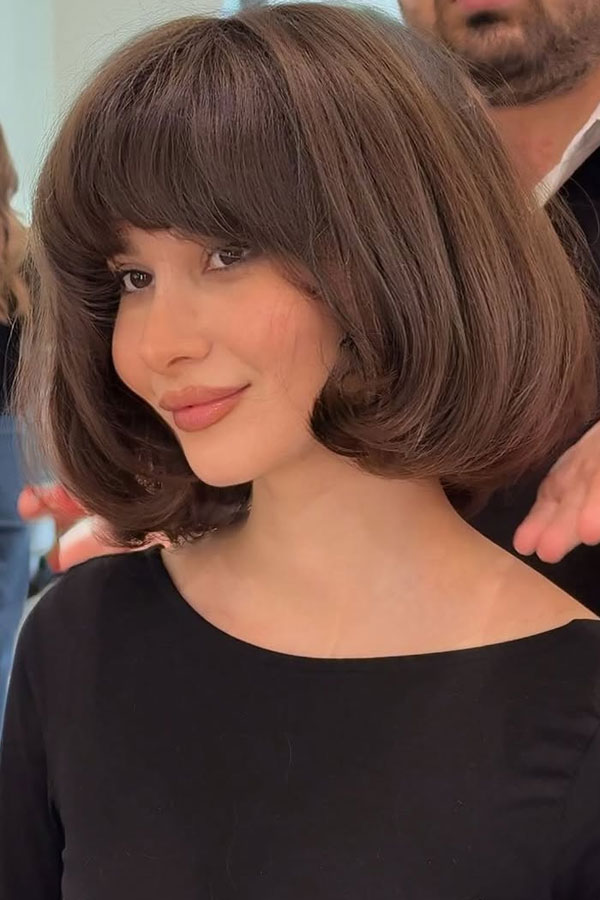
If the classic bob is the reliable sedan of the hair world, the French Bob is the vintage convertible—sleek, timeless, and perpetually cool. While short haircuts come and go with the seasons, this specific variation has maintained a chokehold on the fashion industry for over a century. It isn’t just a haircut; it’s an architectural feat that balances sharp lines with messy, lived-in texture.
If you are considering a dramatic chop that feels both avant-garde and classic, the French Bob is the ultimate destination. Let’s dive deep into what makes this specific cut so iconic, how to style it, and why it remains the gold standard for short hair.
What Exactly Is a French Bob?
To the untrained eye, it might look like a standard bob. However, the French Bob is defined by two very specific characteristics: length and fringe.
-
The Super-Short Length: Unlike the traditional bob that sits at the jawline or the “lob” that hits the shoulders, a true French Bob is cut to the mouth level or even higher (near the cheekbones). This exposes the neck and emphasizes the jawline in a way that feel both vulnerable and incredibly powerful.
-
The Bangs (The Fringe): You cannot have a French Bob without a fringe. Typically, these are cut straight across at the eyebrow level or slightly above (baby bangs). The secret is in the “heavy” yet blunt finish that frames the eyes.
The combination of these two elements creates a “frame” for the face. While a longer bob can sometimes hide your features, the French Bob acts like a spotlight, pushing your cheekbones and eyes to the forefront.
The History: From Roaring 20s to Modern Runways
The French Bob didn’t just appear in a vacuum. It was born out of a desire for liberation. In the 1920s, the “Flapper” era saw women shedding the literal and metaphorical weight of long, Victorian hair. It was a sign of rebellion—a way to say that a woman’s beauty wasn’t tied to how much hair she could pile on top of her head.
Icons like Louise Brooks made the sharp, dark bob a symbol of the silent film era. Fast forward to the 1990s, and the look was reimagined by Mathilda (Natalie Portman) in Léon: The Professional and later by Amélie (Audrey Tautou). Today, it is the go-to look for models off-duty and creative professionals who want a style that looks like they spent an hour on it, even if they just rolled out of bed.
Why It Works: The Science of the “Face Frame”
The reason this cut is so effective is based on facial geometry. By cutting the hair at the level of the lips or cheekbones, you create a horizontal line that draws the observer’s eye across the widest part of your face.
-
For Heart-Shaped Faces: The blunt ends add “weight” near the narrow chin, creating a beautiful balance.
-
For Oval Faces: This cut is a playground. You can go as short as you want without worrying about proportions.
-
For Square Faces: The trick is to add “internal texture.” By thinning out the ends slightly, the cut feels less like a helmet and more like a soft frame.
Pro Tip: If you have a longer neck, the French Bob is your best friend. It highlights the “swan-like” elegance of the neckline, making you appear taller and more poised.
The “Wash and Go” Myth vs. Reality
One of the biggest draws of the French Bob is the promise of low maintenance. Is it true? Mostly, yes.
The goal of a French Bob is to look undone. You don’t want it to look like you used a round brush and a blow dryer for forty minutes. In fact, too much styling can make it look “pageboy” or dated.
How to Style It:
-
Air Dry is King: Wash your hair, apply a bit of sea salt spray or a lightweight mousse, and leave it alone. The natural “kink” or wave in your hair is what gives the French Bob its character.
-
The Flat Iron Bend: If your hair is pin-straight, you can use a flat iron to create a single “S-wave” in the middle of the hair shaft. Don’t curl the ends! The ends should stay relatively straight or tucked slightly under.
-
Dry Shampoo for Volume: Because this cut relies on “poof” and volume at the sides, dry shampoo is your best styling tool—even on clean hair. It adds the grit necessary to keep the hair from laying flat against your head.
Maintenance: The Commitment to the Snip
While daily styling is a breeze, the salon maintenance is where the commitment lies. Because the length is so specific (hitting right at the mouth), even half an inch of growth can change the entire silhouette of the cut.
-
Trims: Expect to see your stylist every 6 to 8 weeks.
-
Banging it Out: Your fringe will grow faster than you think. Many stylists offer “bang trims” for free or a small fee between full appointments.
-
The “Growing Out” Phase: If you decide to grow it out, the French Bob transitions beautifully into a classic bob, then a lob. It’s a very “forgiving” journey compared to a pixie cut.
Finding the Right Stylist
This is not a cut for a beginner stylist. Because it is so short and blunt, there is no room for error. A “bad” French Bob can look like a bowl cut very quickly.
When looking for a stylist, ask for someone who is comfortable with razor cutting or point cutting. A razor-cut French Bob has soft, fuzzy edges that look chic and lived-in. A cut done solely with shears can sometimes look too “heavy” or “blocky.”
Final Thoughts: Should You Do It?
The French Bob is for the woman who is tired of hiding behind her hair. It’s for the person who wants to wake up, drink their coffee, shake their hair out, and be ready for the world.
It is a cut that demands a bit of confidence because it leaves your face completely exposed. But in that exposure, there is a massive amount of freedom. No more ponytails, no more heavy buns, and no more hiding.
Ready to take the plunge? Would you like me to generate a specific 3D-style reference image of a French Bob that you can show to a stylist?