
The Art of Living: A Deep Dive into the World of Interior Design
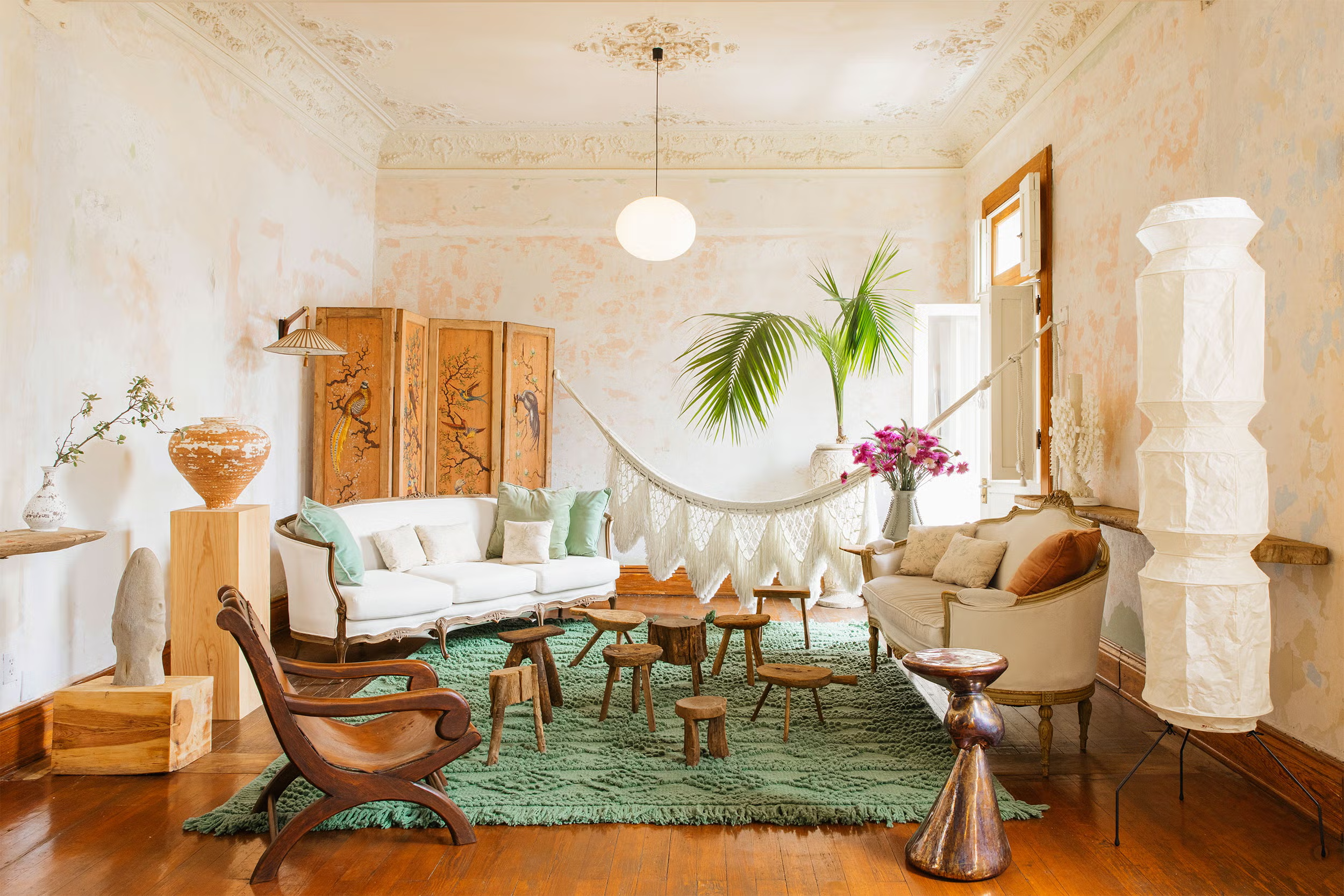
Interior design is far more than just picking out a trendy rug or choosing a paint color that looks good on a Pinterest board. It is a sophisticated discipline—a delicate dance between spatial psychology, architecture, and aesthetics. At its core, interior design is about improving the human experience within a built environment. Whether it’s a tiny studio apartment or a sprawling corporate headquarters, the way a space is designed dictates how we feel, how we move, and how we interact with others.
In this exploration, we’ll break down the fundamental elements of design, the psychological impact of our surroundings, and how to balance form with function.
1. The Core Pillars of Interior Design
To understand how a room “works,” we have to look at the seven fundamental elements that designers use as their toolkit:
-
Space: This is the foundation. It includes “positive space” (where objects are placed) and “negative space” (the empty gaps in between). A well-designed room balances the two to avoid feeling cluttered or cavernous.
-
Line: Lines guide the eye. Horizontal lines (tables, floors) provide a sense of stability and calm, while vertical lines (tall windows, pillars) evoke strength and height. Dynamic lines (curves or diagonals) add energy and movement.
-
Form: This refers to the shape of the room and the objects within it. Forms can be geometric (man-made) or natural (organic).
-
Light: Lighting is arguably the most critical element. It’s categorized into Ambient (general illumination), Task (focused light for reading/cooking), and Accent (used to highlight art or architecture).
-
Color: Beyond aesthetics, color has the power to alter our mood.
-
Texture: Texture adds depth. Think of the contrast between a smooth marble countertop and a chunky wool throw.
-
Pattern: Patterns tell a story and add personality, but they must be used carefully to avoid overwhelming the senses.
2. The Psychology of Space: Why Design Matters
Have you ever walked into a room and immediately felt a sense of dread, or perhaps an instant wave of relaxation? That isn’t a coincidence; it’s environmental psychology.
Designers use specific techniques to influence behavior. For instance, in a restaurant, “warm” colors like red and yellow are often used because they are thought to stimulate appetite. Conversely, in a bedroom, “cool” tones like soft blues and greens are preferred to lower the heart rate and encourage sleep.
Biophilic Design is another growing trend rooted in psychology. It suggests that humans have an innate need to connect with nature. By incorporating natural light, indoor plants, and organic materials like wood and stone, designers can reduce stress levels and increase productivity in occupants.
3. Balancing Form and Function
The golden rule of interior design is that form follows function. A room can be visually stunning, but if it doesn’t serve the needs of the people living in it, the design has failed.
The Layout and Flow
Effective design considers the “traffic flow.” You shouldn’t have to dodge a coffee table to get to the sofa, and a kitchen should be designed around the “work triangle”—the path between the sink, the stove, and the refrigerator.
Sustainability and Longevity
In 2026, interior design has shifted toward conscious consumption. Instead of “fast furniture” that ends up in a landfill within three years, the focus is on sustainable materials like bamboo, recycled glass, and reclaimed wood. Designing for longevity means choosing high-quality pieces and timeless styles over fleeting trends.
4. Popular Design Styles Explained
While every home should be a reflection of its owner, understanding established styles can provide a helpful framework:
| Style | Key Characteristics | Vibe |
| Minimalism | Clean lines, neutral palette, “less is more” | Calm, orderly, functional |
| Industrial | Exposed brick, metal accents, raw materials | Edgy, urban, masculine |
| Scandinavian | Light woods, hygge (cozy) elements, functionality | Warm, bright, simplistic |
| Maximalism | Bold colors, mixed patterns, curated collections | Expressive, energetic, personal |
| Mid-Century Modern | Organic shapes, tapered legs, 1950s/60s influence | Retro, sophisticated, sleek |
5. Common Design Mistakes to Avoid
Even with the best intentions, it’s easy to stumble. Here are a few pitfalls to watch out for:
-
Ignoring Scale: A common mistake is buying furniture that is too large for a small room, or too small for a large room. Always measure twice!
-
Pushing Everything Against Walls: People often think this makes a room feel bigger, but it actually creates a “waiting room” vibe. Floating furniture (placing pieces away from walls) creates more intimate conversation areas.
-
The “Catalog” Look: Avoid buying an entire furniture set from one store. A home feels more authentic and “lived-in” when it features a mix of textures, eras, and personal mementos.
-
Poor Lighting: Relying solely on a single overhead light (the “big light”) can make a space feel flat and harsh. Layering your lighting is the secret to a professional-looking home.
6. The Future: Technology in Design
Interior design is no longer just about physical objects. We are entering the era of the Smart Home. This involves integrating technology seamlessly so it doesn’t disrupt the aesthetic. Think hidden charging stations, smart glass that tints with a voice command, and circadian lighting systems that mimic the movement of the sun to keep your internal clock in check.
Furthermore, Virtual Reality (VR) and Augmented Reality (AR) have changed how we design. You no longer have to guess if a sofa fits; you can use your phone to “place” a 3D model of that sofa in your living room to see exactly how it looks before you hit “buy.”
Conclusion
Interior design is a powerful tool. It has the ability to turn a house into a home and a workspace into a hub of innovation. By understanding the balance of elements—light, color, space, and function—you can create an environment that doesn’t just look good, but actually makes your life better. Whether you are a minimalist or a maximalist, the goal remains the same: to create a space that is a true reflection of who you are.